
0%

Choosing a dependable Jumping Jet Fountain Nozzle supplier involves more than comparing product photos and listed prices. A successful water display depends on timing, pressure stability, nozzle accuracy, lighting compatibility, and long-term service. This guide examines seven suppliers through those practical details. It considers commercial plazas, hotel entrances, public gardens, and smaller architectural installations.

Hydraulic engineer and fountain consultant James Lawrence states, “A reliable jump begins with controlled pressure, not maximum pressure.” That principle remains important when evaluating technical specifications. A powerful pump cannot correct poor nozzle machining or unstable control systems. The best suppliers should provide clear flow-rate data, installation guidance, replacement parts, and responsive technical support. They should also explain how their Jumping Jet Fountain Nozzle performs under different water conditions.

Field experience reveals smaller issues that brochures often ignore. Fine filters can reduce blockages, while accurate alignment protects the clean arc between launch and landing. Stainless steel construction may resist corrosion, but maintenance still matters. No supplier is perfect. Some offer excellent engineering but limited after-sales support. Others respond quickly yet provide incomplete testing information.

This comparison therefore looks beyond polished claims. It weighs engineering consistency, customization options, warranty terms, delivery reliability, and user feedback. The ranking may not fit every project. Site conditions can change the result. A quiet indoor fountain needs different priorities from a large outdoor installation exposed to wind, dust, and temperature changes. Careful buyers should request samples, technical drawings, and performance data before making a final decision.
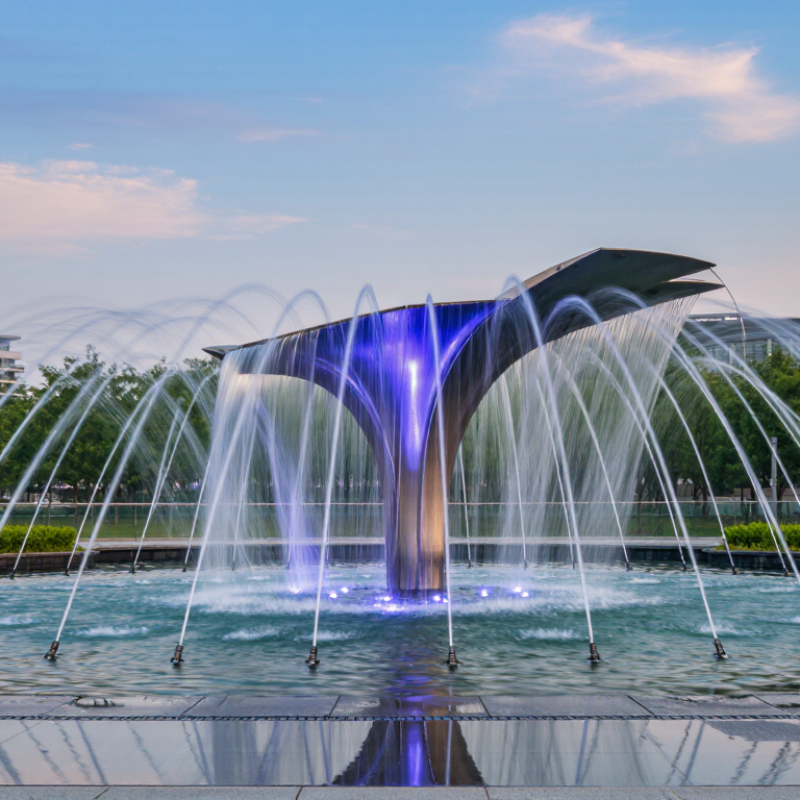
7 Best Jumping Jet Fountain Nozzle Suppliers

What Is a Jumping Jet Fountain Nozzle?

A jumping jet fountain nozzle is a precision water outlet that creates separate, transparent arcs. Unlike a continuous spray nozzle, it uses rapid valve control to cut a laminar stream into timed “jumps.” Each arc can travel several meters, depending on pump pressure, nozzle diameter, and elevation. Clear water requires careful filtration because tiny particles can disturb the stream.

The nozzle usually works with a fast-acting solenoid valve, underwater lighting, and digital timing control. A stable pressure range matters. Too little pressure produces short, broken arcs; excessive pressure causes mist and uneven landings. ISO 9906 pump-testing guidance emphasizes accurate flow and pressure measurement, which is useful when comparing suppliers. The 2023 UN World Water Development Report also highlights growing pressure on freshwater resources, so responsible designs should include recirculation, level sensors, and leak monitoring.

Supplier evaluation should include tested flow curves, valve response data, spare-part availability, and installation instructions. Field inspection often reveals a simple problem: a beautiful nozzle can fail when the filter is undersized. The U.S. Department of Energy’s pump-system guidance shows that efficient hydraulic design can reduce wasted energy, although fountain performance still depends on programming and maintenance. Product claims deserve verification. A short demonstration video is not enough. Ask for operating pressure, flow rate, arc distance, material grade, and cleaning requirements before choosing equipment.

Key Criteria for Evaluating Jumping Jet Nozzle Suppliers

When evaluating jumping jet fountain nozzle suppliers, start with the water effect, not the catalogue image. Ask for measured jet height, landing accuracy, cycle speed, and acceptable pressure range. A supplier with field experience should explain how pump fluctuation affects the arc. Request a live test or an unedited performance video. Watch the stream under changing light. Droplets, splashing, and uneven landings reveal more than polished photos. Small details matter. The nozzle should produce repeatable jumps, not occasional surprises.

Technical expertise appears in the construction details. Check nozzle material, seal quality, cleaning access, and resistance to continuous wet operation. Ask how the actuator, valve, controller, and lighting system communicate. A reliable supplier provides drawings, flow data, installation limits, maintenance intervals, and replacement guidance. Documentation should be clear enough for a technician on site. If answers remain vague, pause. The lowest purchase price may create higher pump, labor, and repair costs later. I have seen attractive samples fail when water quality changed.

Evaluate authority through references from comparable projects, not impressive project counts alone. Speak with operators about noise, service response, spare-part availability, and performance after one season. Confirm testing procedures and quality checks before shipment. Suppliers should explain warranty boundaries in plain language. Reliability includes honest limitations. No supplier is perfect. A thoughtful vendor admits when a design needs filtration, pressure regulation, or a different nozzle size. Compare proposals using the same performance criteria, then record every assumption before approval.

Seven Leading Jumping Jet Fountain Nozzle Suppliers

Seven Leading Jumping Jet Fountain Nozzle Suppliers

The seven leading jumping jet fountain nozzle suppliers differ in practical strengths. The first focuses on precision nozzle machining. The second designs complete water-feature systems. The third supplies stainless-steel manifolds and pressure assemblies. The fourth specializes in programmable lighting and control panels. The fifth supports retrofit projects. The sixth provides large-scale engineering and installation. The seventh offers regional maintenance and replacement parts. This structure helps buyers compare more than price. In field inspections, unstable pressure often causes uneven arcs, dripping, and poor landing points. The U.S. Department of Energy reports that pumping systems can represent 25%–50% of industrial motor energy use, so pump matching matters.

Reliable suppliers should provide flow-rate charts, nozzle tolerances, material certificates, and commissioning records. Stainless steel remains practical for exposed installations, but water chemistry can still create staining or corrosion. Independent testing is useful. Grand View Research’s water-feature market analysis identifies commercial development and public landscaping as important demand areas, yet market reports rarely measure jumping jet performance directly. That gap deserves caution. A polished catalog is not proof of field durability.

Tips: Request a measured spray profile, not only photographs. Check operating pressure at the nozzle. Ask for spare seals and cleaning instructions. Confirm control-system compatibility before ordering. I would also inspect noise levels at night; this detail is easy to miss. Some specifications look precise but remain incomplete.

Product Features, Customization, and Technical Support

When comparing the 7 best jumping jet fountain nozzle suppliers, examine product features beyond appearance. A reliable nozzle should produce a clean, stable arc with minimal splashing. Stainless steel construction helps resist corrosion in outdoor installations. Precise orifice machining also supports consistent water flow and height. Fit matters. Ask for tested flow rates, operating pressure, and recommended pump capacity before ordering.

Customization can include nozzle diameter, jump distance, lighting integration, mounting plates, and finish. Experienced suppliers should provide CAD drawings, installation dimensions, and sample testing. A useful supplier will discuss water quality, filtration, and catch basin design. These details affect performance more than a beautiful product photograph. Request a prototype when the fountain has unusual spacing or a narrow reservoir. Small errors become obvious after installation.

Technical support deserves equal attention. Look for commissioning guidance, troubleshooting charts, replacement parts, and responsive engineering contact. Ask whether support covers pump matching and winter protection. Support varies. In my experience, catalog data is sometimes incomplete, so confirm every measurement in writing. A supplier may promise a perfect arc, yet site wind and uneven paving can change the result. Good technical teams acknowledge these limits and suggest field adjustments, rather than hiding them. That honesty is often more valuable than an impressive specification sheet.

7 Best Jumping Jet Fountain Nozzle Suppliers — Product Features, Customization, and Technical Support
Supplier Type Typical Product Features Customization Options Materials and Installation Controls and Integration Technical Support to Confirm Best Suited For
1. Fountain Equipment Manufacturer Jumping jet nozzles, pumps, manifolds, and related fountain components; product specifications vary by model. Nozzle configuration, connection sizes, flow requirements, and project-specific assemblies may be available. Confirm wetted-part materials, corrosion suitability, mounting method, and access for maintenance. Ask whether the equipment can be coordinated with variable-speed pumps, lighting, and a fountain control panel. Request product datasheets, hydraulic requirements, installation drawings, and recommended spare parts. Projects that need components from a manufacturer with product-level documentation.
2. Custom Fountain System Integrator Can coordinate jets with pumps, filtration, water treatment, lighting, and control equipment as a complete system. System layout, jet spacing, sequence design, and equipment selection can be developed around site conditions. Confirm responsibility for pipework, electrical coordination, access panels, drainage, and commissioning. May coordinate show-control equipment and timing; confirm supported protocols and third-party interfaces. Ask for hydraulic calculations, coordinated drawings, startup procedures, and commissioning scope. Commercial or public installations requiring coordinated equipment and installation planning.
3. Architectural Water-Feature Specialist Focuses on visual integration of water features with plazas, pools, landscapes, or architectural settings. Jet positions, viewing angles, basin details, and finish choices can be coordinated with the design. Confirm that materials and finishes are appropriate for the water chemistry and outdoor exposure. Lighting and show sequences may be part of the design; confirm who supplies and programs the controls. Request design coordination, detail drawings, interface schedules, and maintenance access recommendations. Projects where appearance, site coordination, and architectural detailing are central requirements.
4. Commercial Fountain Distributor Typically supplies fountain components from a range of manufacturers, subject to availability and product compatibility. Can help specify compatible parts and connection arrangements; bespoke fabrication should be confirmed separately. Check product origin, material specifications, delivery lead times, and replacement-part availability. Confirm compatibility with the existing pump, panel, lighting, and control system before ordering. Ask for selection assistance, current datasheets, warranty terms, and the route for manufacturer support. Replacement projects or buyers sourcing standard components from multiple product lines.
5. Stainless-Steel Fabrication Specialist May fabricate custom nozzle bodies, brackets, manifolds, or mounting assemblies to project drawings. Dimensions, connections, supports, and surface finish may be tailored to the approved design. Specify the stainless-steel grade, fabrication method, finish, and suitability for the site’s water conditions. Electrical controls are usually a separate scope unless explicitly included in the supplier’s proposal. Request fabrication drawings, material documentation, inspection details, and installation tolerances. Projects needing non-standard mechanical parts or custom mounting arrangements.
6. Fountain Controls and Automation Provider Supplies or configures control panels, pump sequencing, lighting coordination, and timed fountain effects. Operating schedules, sequence timing, interlocks, and interfaces can be defined to suit the project. Confirm enclosure rating, electrical requirements, environmental conditions, and local code compliance. Document supported control interfaces and clarify responsibility for integration with the jet and pump equipment. Ask for wiring diagrams, programming documentation, operator training, and remote-support availability. Installations where reliable sequencing and coordination with other fountain effects are priorities.
7. Fountain Service and Retrofit Specialist Assesses existing installations and may supply replacement jets, pumps, seals, or control components. Retrofit choices depend on the existing basin, pipework, power supply, and available installation space. Confirm compatibility with existing connections and whether site inspection or field measurements are included. Existing panels and controls should be checked for electrical and operational compatibility before equipment changes. Request a site assessment, fault-finding scope, commissioning plan, and ongoing maintenance options. Repairs, upgrades, and modernization of operating fountain installations.
Supplier types are anonymized categories, not named or ranked companies. Product availability, specifications, customization, and support vary by project and supplier; verify all details in the supplier’s current documentation and written quotation.

How to Select the Right Supplier for Your Fountain Project

Choosing a jumping jet nozzle supplier starts with the site, not a catalogue. Share the required arc height, throw distance, water depth, wind exposure, and operating schedule. A supplier should explain how pump pressure, pipe diameter, and nozzle geometry affect a clean, repeatable stream. Details matter. Ask for calculations tied to your layout, rather than a generic flow-rate chart.

Review construction materials and machining quality, especially where water chemistry may cause scaling or corrosion. Request dimensional drawings, pressure ranges, recommended filtration, and maintenance intervals before comparing quotations. If possible, see a working demonstration under conditions close to your project. A smooth showroom display can hide splash, noise, or unstable arcs outdoors. Still, a demo cannot reproduce every site. Check whether the supplier offers commissioning help, spare parts, and troubleshooting after installation.

Past project photos are useful, but ask what changed between the design and final installation. Reliable suppliers describe limits plainly, including sensitivity to wind and the need for consistent water quality. Compare overall project fit, not just unit price: controls, pumps, fittings, shipping, and technical support all matter. A low quote may still be right; it simply deserves closer questions. Choose a supplier who documents assumptions and responds clearly when site conditions shift.

FAQS

What is a jumping jet fountain nozzle?

It creates separate, clear water arcs instead of one continuous spray. Rapid valve control forms timed jumps. Each arc needs stable pressure.

How far can the water arc travel?

The distance depends on pump pressure, nozzle diameter, and installation height. Several meters may be possible. Wind changes everything.

What pump information should I request?

Ask for tested flow rates, operating pressure, and recommended pump capacity. Request calculations based on your fountain layout. Generic charts can mislead.

Why is filtration important?

Small particles can disturb the transparent water stream. An undersized filter may cause broken arcs and extra splashing. Clean water helps.

Which materials suit outdoor installations?

Corrosion-resistant stainless steel is often suitable outdoors. Precise orifice machining supports consistent height and flow. Water chemistry still matters.

Can the nozzle be customized?

Common options include nozzle diameter, jump distance, lighting, mounting plates, and surface finish. Request CAD drawings before production. Small errors become visible later.

What technical support should a supplier provide?

Useful support includes installation guidance, troubleshooting charts, spare parts, and commissioning assistance. Ask about pump matching and winter protection. Support quality varies.

How should I compare suppliers?

Compare documented performance, materials, filtration needs, controls, fittings, shipping, and support. A low quotation may still work, but ask more questions.

Can a demonstration guarantee successful installation?

No. A showroom test may not show outdoor wind, uneven paving, or local water conditions. I may trust demonstrations too quickly. Verify every measurement in writing.

Conclusion

A Jumping Jet Fountain Nozzle creates a smooth, clear stream of water that appears to leap through the air, adding movement and visual interest to a fountain display. Choosing a suitable supplier involves more than comparing prices: buyers should consider product quality, materials, flow and pressure requirements, installation needs, delivery reliability, and the supplier’s experience with projects of similar size and complexity.

This overview introduces seven leading supplier options as a starting point for research, then compares the features and services that can affect a fountain project’s success. These may include nozzle configurations, lighting compatibility, custom dimensions, control systems, and access to technical guidance before and after installation. The right choice depends on the project’s design goals, site conditions, budget, and maintenance expectations. By clarifying these requirements and asking suppliers focused questions, project teams can select a Jumping Jet Fountain Nozzle solution that fits their plans and performs reliably over time.

Ethan

Ethan

Ethan is a professional marketing specialist dedicated to helping businesses understand products, markets, and customer needs more clearly. With extensive knowledge of the company’s solutions, he combines product expertise, strategic thinking, and practical communication skills to create valuable......