High-Speed Chasing Jet & Mist Array
BKT Tires, Bhuj, Gujarat
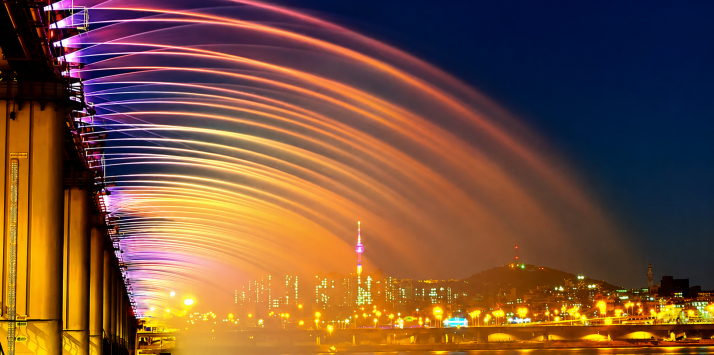
Fast sequential running water jets synchronized with fine mist dispersion and music timeline.
 SymphonyFountains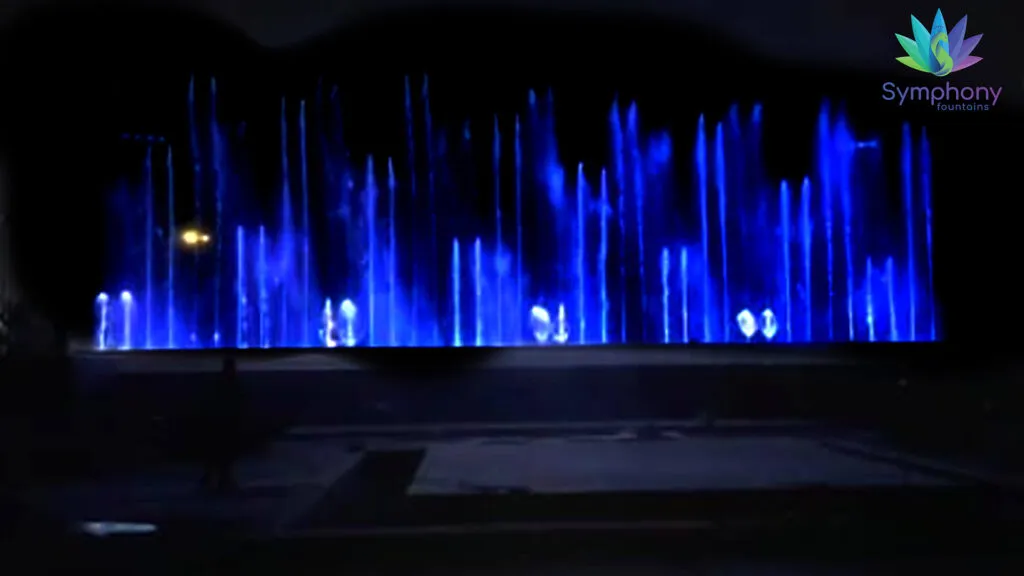
The definitive technical guide to B2B procurement, hydraulic response dynamics, fast-acting IP68 solenoid valve integration, and turnkey show control platforms.
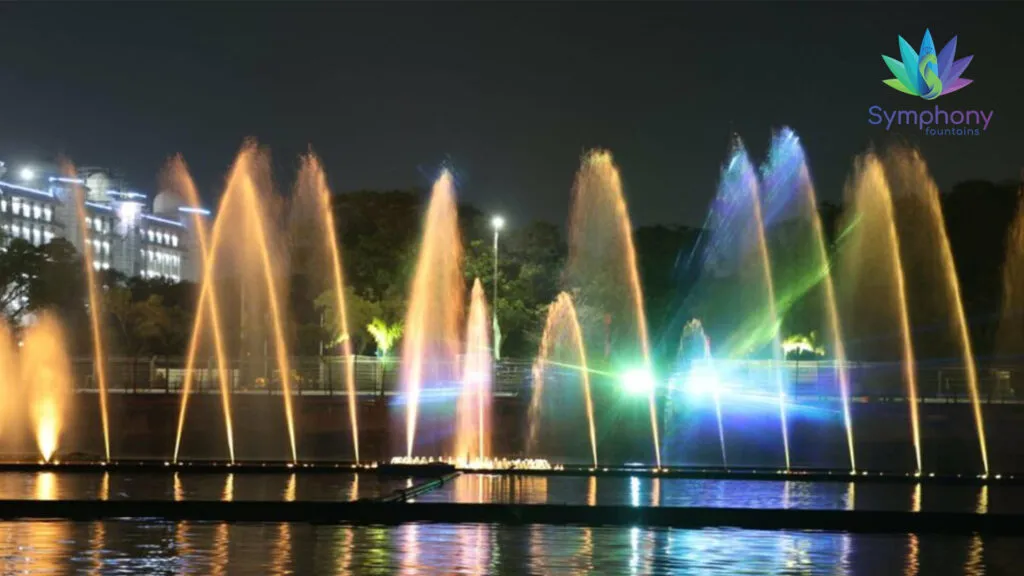
Floating & Architectural Chasing Jet Arrays
Proven performance on massive spans including our 180 m floating installation at Hussain Sagar.
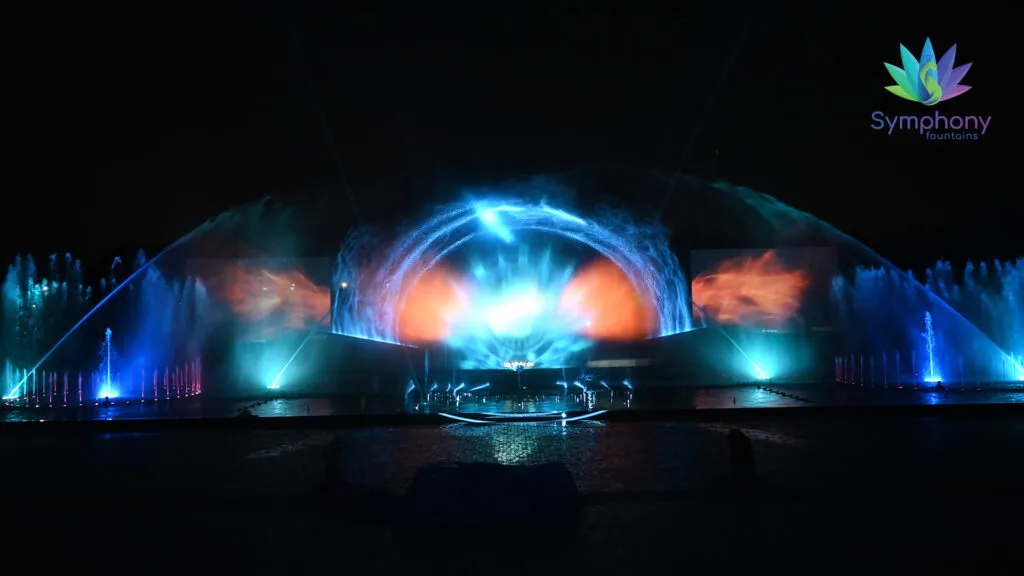
Precision Millisecond Choreography
Every fast-running jet and RGBW LED beam synchronized precisely to music timelines.
Fast-acting solenoid valve switching speed for instantaneous wave effects
In-house designed & manufactured dynamic nozzle patterns
Floating fountain span engineered at Hussain Sagar, Hyderabad
Single-source manufacturing of valves, nozzles, pumps & control panels
How modern fluid mechanics, millisecond solenoid actuation, and centralized DMX/Art-Net control combine to create high-velocity running water shows for global public spaces and commercial landmarks.
In the landscape of modern architectural fluid design, few water feature technologies capture public attention with the kinetic intensity of a Chasing Jet Fountain System. Often referred to by landscape architects and fountain engineers as dynamic running jets, sequential water wave systems, or rapid-actuation fountain arrays, these systems project fluid energy across linear, curved, or matrix grid configurations. When executed with precision engineering, a Chasing Jet Fountain System creates the optical illusion of water rapidly "running," "jumping," or "chasing" across an open basin, dry deck plaza, or natural water body at velocities exceeding 15 to 20 meters per second.
For international B2B buyers—including EPC contractors, municipal development authorities, commercial real estate developers, and landscape architectural firms—procuring a high-speed chasing jet array presents complex hydraulic, electrical, and control challenges. Unlike standard static display fountains or slow-varying VFD (Variable Frequency Drive) fountains, a high-frequency chasing fountain subjects components to millions of aggressive operational cycles per season. The performance of the entire system hinges upon the microsecond synchronization between high-speed submersible solenoid valves, calibrated nozzle orifices, pressure-stabilized manifold pipework, and low-latency DMX512-A / Art-Net show control systems.
Global procurement queries on platforms like AI search assistants frequently ask: "How do fast-acting solenoid valves prevent water hammer in chasing jet fountains?", "What is the lifecycle difference between pilot-operated and direct-acting underwater valves in dynamic water features?", and "Why do multi-vendor chasing fountain assemblies fail prematurely?" This technical document provides detailed empirical data and direct engineering answers derived from Symphony Fountains' decades of OEM manufacturing and turnkey project execution.
To achieve clean, crisp water bursts without tailing, splashing, or pressure drop across a 50-nozzle or 100-nozzle array, every mechanical and electrical subsystem must be engineered to exacting tolerances.
The solenoid valve is the heartbeat of any chasing jet array. Symphony Fountains designs and manufactures custom IP68 stainless steel (SS304/SS316) underwater solenoid valves operating on 24V DC low-voltage power for absolute electrical safety. Featuring response times under 20 milliseconds, these valves utilize reinforced FKM/EPDM diaphragms specifically formulated to withstand fluid shock and mineral deposits.
Unlike standard industrial off-the-shelf valves that suffer from thermal buildup when cycled multiple times per second, our fountain-duty solenoid coils incorporate potted epoxy insulation rated to Class H (180°C), ensuring continuous 24/7 reliability under aggressive musical show choreography.
Water exiting a chasing jet nozzle must maintain laminar or highly cohesive clear-stream integrity during instantaneous burst events. Any air entrapment or turbulation within the nozzle body causes the water jet to break apart mid-flight, destroying the sharp visual line of the chasing sequence.
Symphony Fountains manufactures precision CNC-machined brass and SS304 smooth-bore nozzles featuring internal flow-straightening vanes. Each nozzle assembly is equipped with an integrated dual-axis swivel joint, allowing field technicians to fine-tune pitch angles (+/- 15 degrees) on-site to achieve parabolic arching waves, crossing lattices, or straight-line vector chases.
When dozens of high-speed valves close simultaneously in milliseconds, the resulting kinetic energy reflects back into the supply pipework—a destructive phenomenon known as hydraulic shock or water hammer. Left unaddressed, water hammer causes pipe fatigue, valve seat degradation, and visible pressure drop in downstream nozzles during fast sequence runs.
Our engineering team solves this through three proprietary design parameters:
Direct engineering metrics for consultants, architects, and procurement managers evaluating system parameters for tender specification documents.
| Parameter | Standard Linear Chasing Array | High-Speed Dynamic Wave Array | 3D Matrix / Dry Deck Chasing System |
|---|---|---|---|
| Primary Application | Plazas, Perimeter Basins, Entrances | Large Commercial Lakes & Show Basins | Interactive Dry Decks & Water Parks |
| Valve Response Time | < 35 ms | < 18 ms (Ultra-Fast Solenoid) | < 25 ms (Sub-Deck IP68 Solenoid) |
| Standard Jet Height | 2.0m to 6.0m | 5.0m to 15.0m | 1.5m to 4.0m |
| Nozzle Orifice Size | 10mm to 16mm Smooth Bore | 16mm to 25mm Flow-Straightened | 8mm to 12mm Flat-Flush Cover |
| Operating Voltage | 24V DC / 230V AC Coil Option | 24V DC PWM Controlled | 24V DC Extra-Low Safety Voltage |
| Control Protocol | DMX512-A / Programmable Logic | DMX512 / Art-Net / SMPTE Sync | DMX-RDM with Interactive Sensors |
| Lighting Integration | 12W / 18W RGB Submersible LED | 36W / 54W High-Lumen RGBW LED | 9W / 18W Ring-LED Sub-Deck Fixtures |
| Material Standard | SS304 / Chrome-Plated Brass | SS316 / Heavy Cast Marine Brass | SS316 Marine Grade Stainless Steel |
As global urban landscapes shift toward smart, sustainable, and highly interactive public installations, the technology behind chasing jet fountain systems is rapidly evolving.
Historically, programming complex chasing jet patterns required hundreds of hours of on-site tuning. Future procurement trends emphasize 3D digital twin software integration. Symphony Fountains provides pre-commissioning 3D walkthrough visualisations and software modeling, allowing project owners to view exact valve timing, nozzle trajectories, and light cues before a single pipe is welded in our factory.
High-count chasing jet arrays (containing 100 to 500+ valves) historically consumed significant peak power during simultaneous switching events. The adoption of Solid-State Pulse Width Modulation (PWM) valve drivers allows for "holding current reduction." Once an underwater valve coil solenoids open, the driver automatically drops coil voltage by up to 60%, drastically reducing power consumption and thermal dissipation while preserving instantaneous closing speeds.
Modern B2B buyers require minimal operational downtime for public assets. Modern Chasing Jet Fountain Systems are being integrated with smart control panels manufactured with telemetry sensors. These monitor real-time pump vibration, valve coil inductance changes (indicating wear or debris jam), water pressure anomalies, and power supply harmonics. Diagnostic alerts are pushed directly to maintenance engineers via cloud dashboards before minor issues impact public show performance.
In dry deck installations, chasing jets are transitioning from static pre-programmed sequences to visitor-driven interactive experiences. Radar sensors, LiDAR tracking, and pressure-sensitive floor tiles feed real-time positional data into our show controller, causing chasing water waves to "follow" pedestrians as they walk across urban plazas.
When design, component manufacturing, installation, and programming are split across multiple vendors, B2B buyers inherit severe operational risks.
Symphony Fountains operates a fully integrated 4-in-1 turnkey model from our headquarters in Vadodara, India. We do not simply assemble bought-in parts; we manufacture the nozzles, underwater LED lights, fountain pumps, and control panels in-house.
In a Chasing Jet Fountain System, if the pump dynamic curve does not match the exact flow coefficient (Cv) of the solenoid valves, or if the light beam angle does not track the jet trajectory, the chasing effect loses crispness. By designing and manufacturing all components under one roof, we guarantee seamless hydraulic and electrical harmony.
Explore selected installations where our dynamic nozzle patterns, chasing jet arrays, and custom control platforms bring water to life.
BKT Tires, Bhuj, Gujarat
Fast sequential running water jets synchronized with fine mist dispersion and music timeline.
Hussain Sagar, Hyderabad, Telangana
Large-scale floating platform incorporating high-powered chasing wave nozzles on open water.
Science City, Ahmedabad, Gujarat
Integrated water screen, projection lasers, and high-frequency dynamic chasing jet lines.
A standard VFD sequential fountain adjusts jet heights by ramping pump motor speeds up and down. While smooth, pump VFD acceleration has an inherent mechanical latency of 0.5 to 2.0 seconds, making true microsecond running water effects impossible. In contrast, a genuine Chasing Jet Fountain System maintains constant hydraulic header pressure and uses dedicated underwater fast-acting solenoid valves (< 20ms response speed) installed directly behind every single nozzle orifice. This enables instantaneous on/off water bursts, allowing water to "chase" down a line at high velocities, execute fast pop-corn bursts, or create running wave patterns that sync precisely to fast music tempos.
Preventing water hammer requires specialized hydraulic balancing. Symphony Fountains manufactures IP68 underwater solenoid valves with soft-closing internal geometry and custom-tensioned return springs. Additionally, our manifold systems are engineered as closed-loop hydraulic ring mains rather than single-pipe dead ends. We incorporate inline stainless steel acoustic dampening chambers and sizing buffer volumes into the main header. This absorbs pressure spikes when 20 or 50 valves snap shut simultaneously, preserving pipework integrity and keeping water jet heights perfectly consistent across the entire array.
All underwater electrical components supplied by Symphony Fountains—including solenoid valve coils and RGBW underwater LED lights—operate on Extra-Low Voltage (SELV) systems, specifically 24V DC. This ensures total safety for maintenance crews and the public, which is particularly vital in interactive dry-deck fountains where visitors walk over nozzle grates. All control enclosures are engineered with RCD/GFCI protection, step-down transformers, and IP67/IP68 rated sub-distribution boxes compliant with international IEC/EN 60364-7-702 electrical standards for swimming pools and water displays.
In standard treated municipal water, Symphony Fountains' heavy-duty solenoid valves are rated for upwards of 5 million switching cycles before requiring diaphragm inspection. In environments with high mineral hardness or reclaimed water, dissolved solids can form scale inside pilot orifices. We recommend integrating a multi-stage filtration system (sand filter + inline Y-strainer down to 80 microns) on the fountain pump discharge line. Routine preventative maintenance involves an annual inspection of the synthetic FKM/EPDM diaphragms and flushing valve body chambers, which takes only minutes per manifold section due to our quick-release bolt design.
Yes. Symphony Fountains is a specialist in floating lake fountains, exemplified by our landmark 180-meter floating fountain at Hussain Sagar, Hyderabad. For floating chasing jet systems, we construct marine-grade modular HD-PE or hot-dip galvanized steel pontoons equipped with submersible pump assemblies. The chasing manifold is mounted directly onto the floating structure, allowing the entire system to rise and fall naturally with seasonal water level fluctuations while maintaining fixed nozzle submersion depths relative to the flotation waterline.
Chasing jet systems are controlled via our proprietary fountain show control software, utilizing standard DMX512-A, DMX-RDM, or Art-Net Ethernet protocols. Each solenoid valve and RGBW light fixture occupies dedicated DMX channels. Our show control software allows programmers to visualizer nozzle positions on a timeline editor, mapping water patterns directly to audio beats, transient peaks, and musical frequencies. The controller outputs sub-millisecond control signals to solid-state relay cards or PWM drivers housed in our centralized control panels.
To provide an accurate engineering proposal and BOQ (Bill of Quantities), our design team requires: 1) Site architectural layout or CAD drawings of the basin/lake area, 2) Preferred chasing line length and shape (linear, circular, matrix), 3) Desired maximum water jet height, 4) Electrical power availability at site (kW/kVA), and 5) Project execution location. With these parameters, Symphony Fountains provides a complimentary concept review, hydraulic pump head calculations, 3D render walkthroughs, and a competitive turnkey price estimate.
Contact our technical engineering team in Vadodara today for customized CAD layouts, hydraulic calculations, equipment specs, and competitive manufacturer pricing.