
0%

Choosing a Musical Fountain Control Panel is not simply a matter of matching a price to a feature list. The panel coordinates pumps, lighting, audio, and timing, often under changing site conditions. A small outdoor installation may need straightforward scheduling and clear fault alerts. A larger show may require synchronized DMX lighting, multiple pump outputs, and room for future expansion. Ask how the system will behave during a communication failure, a power interruption, or a pump fault. Those details matter after installation, not just during a product demonstration.

This guide will compare control options, explain compatibility requirements, and identify questions to ask suppliers. Look closely at enclosure protection, interface clarity, service access, and available technical support. A screen that looks impressive in a showroom can be difficult to read beside a wet equipment cabinet. There is no perfect panel for every fountain. In practice, trade-offs remain: advanced automation can add setup complexity, while a simpler system may limit later changes. One important source limitation deserves mention: no verifiable quotation from a named Musical Fountain Control Panel specialist was provided, so this introduction does not invent one. The recommendations should be checked against the fountain’s actual equipment list and operating conditions. Small details can decide the outcome.
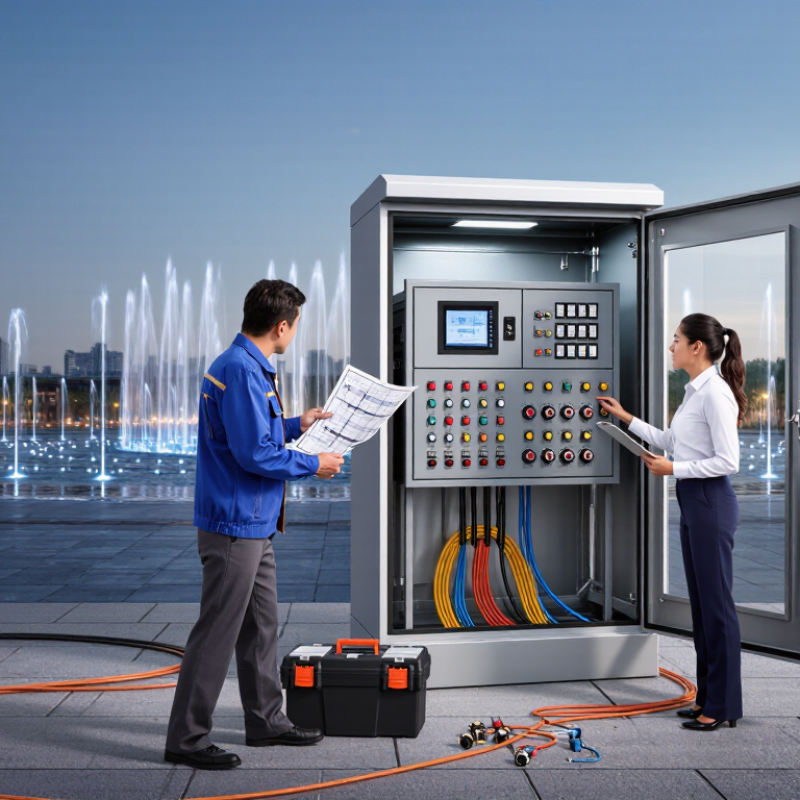
How to Choose a Musical Fountain Control Panel?

Define Fountain Scale: DMX512 Provides Up to 512 Data Slots per Universe

A musical fountain’s control-panel capacity should be calculated in DMX slots, not fixture counts alone. ESTA’s ANSI E1.11 standard defines DMX512 as a system with up to 512 data slots in each universe. Each slot carries an 8-bit value, ranging from 0 to 255. The packet also includes a start code, which is separate from those 512 slots. The math is clean. Real installations are less tidy.

For example, a basic RGB fixture typically uses three slots, so one universe can address up to 170 such fixtures, with two slots left unused. A four-channel RGBW fixture uses four slots, allowing up to 128 fixtures. These are theoretical limits: moving lights, dimmers, and fountain interfaces may need more channels per device. A pump or valve should also be controlled through suitable equipment, rather than assumed to connect directly to DMX. Count every addressable function, then leave room for expansion. A practical panel plan should account for separate water zones, lighting groups, and spare capacity. Otherwise, a small design change can push the system beyond one universe. Check the fixture channel modes and the controller’s supported universe count before specifying hardware.

Match Control Inputs and Outputs to Pumps, LEDs, and Sensors

A musical fountain panel should be specified by the signals each device actually needs, not by a long feature list. For pumps, check motor voltage, running current, starting method, and whether a variable-frequency drive needs speed references. Confirm that the panel’s outputs can command the drive without switching motor power directly. The U.S. Department of Energy’s Energy-Efficiency Policy Opportunities for Electric Motor-Driven Systems estimates that motor-driven systems use about 46% of global electricity. That makes sensible pump control more than a convenience. It still cannot compensate for an oversized pump.

For LEDs, identify the fixture’s control protocol and required channel count before choosing outputs. A color-changing fixture may need a data output, while a simple circuit may use switched power; these are not interchangeable. Match sensor inputs to their signal types, such as dry contact, 4–20 mA, or 0–10 V. Then check isolation, cable distance, and how the panel responds to a lost signal. Small details matter. A wet-deck level sensor can behave differently from a temperature probe, even when both appear as “inputs” on a drawing.

The U.S. Department of Energy’s Improving Pumping System Performance sourcebook reports potential energy reductions of 20–50% from adjustable-speed control in suitable pumping applications. Treat that as a range, not a promise; actual savings depend on flow demand and system design. Before ordering, create an I/O schedule listing every pump, LED circuit, sensor, signal type, and failure response. Test the sequence with the installer. One awkward point: drawings rarely capture every site condition, so leave spare capacity and verify wiring on site.

Size Power Components from Motor Nameplate Current and Load Data

How to Choose a Musical Fountain Control Panel?
Size Power Components from Motor Nameplate Current and Load Data

Start with each motor’s nameplate. Record its rated current, voltage, phase, frequency, and duty rating. Use current—not horsepower alone—to guide component sizing. A 2.2 kW pump may draw different current depending on its supply and design. Check the manufacturer’s data, too. The nameplate is a strong starting point, but it does not describe every operating condition.

List which pumps, lights, and other loads may run together. Add their running currents to estimate the panel’s continuous demand. Then check motor starting current, especially if several pumps start at once. Contactors, overload protection, wiring, and any variable-frequency drive must suit the motor and its duty. Allow for enclosure temperature and ventilation, since heat can affect component ratings. A panel can look adequate on paper and still run hot. Verify the selections against equipment documentation with a qualified panel designer.

Tips: Photograph each nameplate before ordering parts. Note the maximum number of motors that can operate simultaneously. Don’t guess from a faded label; confirm uncertain data with the equipment supplier. Recheck the load assumptions when fountain sequences change.

How to Choose a Musical Fountain Control Panel

Use motor nameplate current and load data to select panel components.

These representative current values are estimates for 400 V, three-phase motors; actual nameplate current varies with motor efficiency and power factor. Use each motor’s nameplate current to set its overload protection, then verify switching devices, short-circuit protection, supply capacity, starting method, duty cycle, and simultaneous loads against applicable standards.

Select Enclosure Protection Using IEC 60529 IP Ratings

A musical fountain control panel faces spray, airborne grit, and wet maintenance conditions. Choose its enclosure protection from the actual exposure, not appearance alone. IEC 60529 defines the IP code: the first digit rates protection against solid objects, and the second rates water ingress. IP6X means dust-tight; IPX5 covers water jets. Small details matter. Cable glands, door seals, and display cutouts must preserve the enclosure’s rating after assembly.

IEC 60529 specifies an IPX5 water-jet test at 12.5 litres per minute and an IPX6 test at 100 litres per minute. IPX7 tests temporary immersion, generally at one metre for 30 minutes under the standard’s test conditions. These figures describe laboratory tests, not a guarantee against every fountain installation. A panel beside forceful nozzles may need a different rating from one in a sheltered equipment room. Check spray direction, cleaning methods, and drainage around the cabinet. IP ratings do not measure corrosion resistance, UV durability, or condensation control. An IP66 enclosure can still fail if moisture forms inside. That part is easy to overlook.

Check Electrical Safety and Emergency Stops Against IEC 60204-1

A musical fountain panel sits between powerful electrical equipment and a wet, crowded performance area. IEC 60204-1 offers a practical reference for machinery electrical safety, but the full installation and local requirements still need qualified review. Check that the enclosure, cable entries, and internal components suit the site’s moisture, spray, and cleaning conditions. A loose gland can let damp air reach terminals. Small detail, big consequence.

Look for clearly identified isolation and overcurrent protection, protective bonding, and wiring arranged to reduce accidental contact. The emergency stop should be easy to reach from operating positions, clearly marked, and connected to stop hazardous motion or water effects as intended by the risk assessment. Pressing it should not cause an automatic restart when released. Reset, then deliberate restart. Test the actual response, not just the indicator lamp.

During commissioning, record each emergency-stop location, circuit behavior, and test result. Check what happens when power returns after an outage; lighting, pumps, and valves may respond differently. The awkward part is that a neat panel inspection cannot reveal every site hazard. Review the fountain layout, access routes, and maintenance tasks with the people who operate it. Keep drawings and labels legible, even after years of service.

FAQS

How many control slots does one DMX universe provide?

It provides up to 512 data slots. Each slot carries a value from 0 to 255. The start code is separate.

How many basic RGB fixtures fit in one universe?

A basic RGB fixture usually uses three slots, allowing up to 170 fixtures. Two slots remain unused. Real systems may need more.

How many four-channel RGBW fixtures can one universe address?

At four slots per fixture, the theoretical limit is 128. Check each fixture’s channel mode before planning.

Why shouldn’t fixture counts alone determine panel capacity?

Moving lights, dimmers, and fountain interfaces can use extra channels. Count every addressable function and leave expansion room. The estimate can still be wrong.

Can pumps and valves connect directly to DMX?

Don’t assume so. Use suitable control equipment for pumps and valves, and verify the system design.

What safety details should a fountain control panel include?

Check the enclosure, cable entries, and components for moisture and spray. A loose cable gland can expose terminals to damp air. Small detail, big consequence.

How should an emergency stop behave?

It should be reachable, clearly marked, and tested under real operating conditions. Releasing it should not restart equipment automatically. Reset, then deliberate restart.

What should commissioning tests and records cover?

Record emergency-stop locations, circuit responses, and test results. Check behavior after power returns. Test it live.

Why review the fountain layout with operators?

A panel inspection cannot reveal every site hazard. Discuss access routes and maintenance tasks with the people who use the system. I would still double-check.

Conclusion

Choosing a Musical Fountain Control Panel begins with defining the fountain’s scale and control requirements. For DMX512 systems, each universe carries up to 512 data slots, so estimate the channels needed for lighting and other controlled effects before deciding how many universes the installation requires. Next, confirm that the panel has suitable inputs and outputs for the pumps, LED fixtures, and sensors, allowing for both current equipment and planned expansion.

Electrical capacity and protection are equally important. Size switching and power components using the motors’ nameplate current and the expected load data, rather than relying on a rough estimate. Choose an enclosure with an IEC 60529 IP rating appropriate for its exposure to water, dust, and the installation environment. Finally, review electrical safety features and emergency-stop arrangements against relevant IEC 60204-1 considerations. Matching these factors to the site helps create a control system that is practical, appropriately protected, and easier to maintain.

Ethan

Ethan

Ethan is a professional marketing specialist dedicated to helping businesses understand products, markets, and customer needs more clearly. With extensive knowledge of the company’s solutions, he combines product expertise, strategic thinking, and practical communication skills to create valuable......