
0%

An ice tower fountain can transform a counter, buffet, or event display into a striking focal point. The effect depends on more than the ice itself. The right Ice Tower Fountain Nozzle helps shape the water pattern, control splash, and suit the pump’s available flow. A tall, narrow plume may look elegant in a small basin, while a broad spray can need more room and careful drainage. Details matter.

Before choosing, check the fountain’s pump specifications, nozzle connection, and expected water pressure. A nozzle designed for one flow range may produce a weak stream or excessive splashing when paired with a different pump. Consider where the fountain will operate, too. Indoor displays may need quieter operation and tighter splash control; outdoor setups must handle changing conditions. Measure the basin and surrounding space, then compare those dimensions with the nozzle’s spray height and spread.

Material and maintenance deserve attention. Stainless steel and other corrosion-resistant materials can be practical choices, but construction quality and cleaning access matter just as much. Look for clear product specifications, replacement-part availability, and guidance from a supplier familiar with fountain equipment. A photograph alone can be misleading. Not always. Real-world results may differ from a catalog image because water pressure, installation height, and wear all affect the pattern. This guide explores the features worth comparing, common selection mistakes, and simple checks that can help you choose a nozzle suited to your fountain rather than an impressive-looking mismatch.
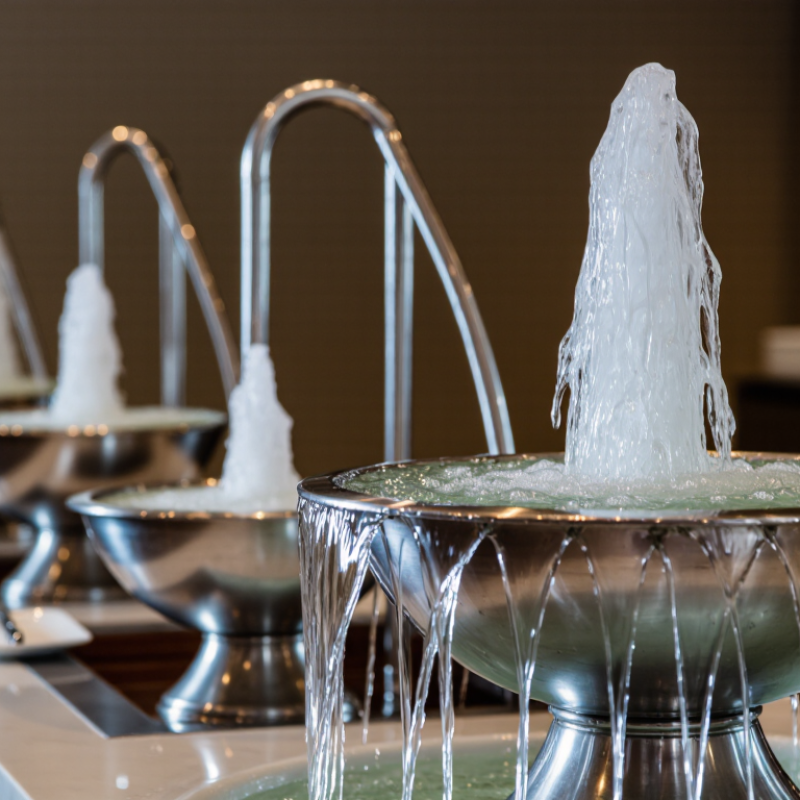
How to Choose the Best Ice Tower Fountain Nozzle?

What an Ice Tower Fountain Nozzle Does

An ice tower fountain nozzle shapes the pump’s moving water into a narrow, upright column. Its outlet size and internal passages influence the stream’s height, thickness, and breakup into droplets. The nozzle does not create pressure; it directs the flow available from the pump. A smooth, centered column needs a steady supply and careful alignment. Even a small tilt can make water fall outside the basin.

Water’s surface tension affects how the stream separates into droplets. The International Association for the Properties of Water and Steam reports a value of about 72.74 millinewtons per metre at 20°C. That helps explain why nozzle geometry matters: a clean outlet can support a coherent stream, while uneven edges may create spray. The Hydraulic Institute’s pump guidance also stresses matching flow and head to the operating system, not choosing equipment by appearance alone. In practice, check the nozzle’s specified flow and pressure against the pump curve, then test it at the installed height. A little turbulence can look dramatic, but it may waste water beyond the basin. Real installations are less tidy than diagrams.

How to Match Nozzle Size to Fountain Design

A fountain nozzle should match the scale and shape of the ice tower, not just the pump. A small basin may look crowded when a wide spray spreads beyond its edges. For a tall, narrow feature, a tighter stream can create a cleaner silhouette and reduce splash onto nearby paths.

Check the nozzle’s flow requirements against the pump curve at the planned operating height. A larger opening often needs more water, but outlet size alone does not predict the finished pattern. Look for flow and pressure data, then consider lift, pipe losses, and wind exposure. Even a well-sized nozzle can produce uneven results when the pump cannot maintain steady pressure. Details matter.

Measure the basin, tower height, and clearance around the fountain before choosing. A practical starting point is to keep the spray inside the basin during calm-weather testing. Watch where droplets land. Then adjust the flow or nozzle size in small steps. I have found that the neatest pattern on paper can look too forceful outdoors. That part takes judgment. Record the pump setting and nozzle used, so adjustments are easier to repeat.

How to Compare Spray Height, Shape, and Water Flow

Choosing an ice tower fountain nozzle means comparing height, pattern, and flow under the same pump conditions. Record pressure and flow with a gauge and flow meter; visual estimates can mislead. ANSI/HI 9.6.5 guidance on rotodynamic pump operation makes the operating point important: nozzle performance depends on the pump’s actual pressure and flow, not its label alone. For a fixed pressure, the nozzle-flow relationship predicts that doubling outlet area roughly doubles flow. More water, though, does not automatically mean a taller, cleaner column.

Compare spray height at the intended operating pressure, then inspect the shape from several metres away. A narrow jet can look dramatic but may break up in wind; a broader crown can feel calmer while consuming more water. The U.S. EPA’s WaterSense at Work guide treats decorative fountains as systems where evaporation, splash, and leaks affect makeup-water demand. Track that demand during a full-day trial, alongside pump flow. Watch the rim and nearby paving for overspray. Small details matter. A slightly uneven plume may reveal a tilted nozzle or fluctuating pressure, not poor design. Field notes are imperfect, but they beat choosing from a catalogue photograph.

How to Choose the Best Ice Tower Fountain Nozzle? - How to Compare Spray Height, Shape, and Water Flow

Nozzle Type Typical Spray Shape Indicative Spray Height Indicative Flow Rate Typical Operating Pressure Best Suited For Selection Considerations
Single-jet nozzle One narrow, vertical stream About 1–3 m About 5–20 L/min About 0.5–2 bar at the nozzle A clean, simple central plume and a defined focal point Wind can bend the stream; use a steady pump supply and choose an orifice that matches the desired height and flow.
Foam nozzle Full, aerated column with a textured appearance About 0.5–2 m About 15–60 L/min About 0.3–1.5 bar at the nozzle A broad, visible display where a solid-looking water column is preferred Usually needs more water than a narrow jet. Performance can change with water level, intake conditions, and debris.
Multi-stream nozzle Several slim jets arranged in a circular or fan pattern About 0.5–2.5 m About 10–40 L/min About 0.5–2 bar at the nozzle A patterned display with multiple distinct streams Check that the pump can supply the combined flow required by all outlets; small openings need clean water to reduce clogging.
Bell or umbrella nozzle Curved sheet of water forming a bell or umbrella shape About 0.3–1.5 m About 10–50 L/min About 0.2–1 bar at the nozzle A compact, rounded spray with a wide visual footprint Shape depends on water level and nozzle adjustment. Allow enough clearance to contain splash and runoff.
Adjustable spray nozzle Variable stream or spray pattern, depending on adjustment About 0.5–3 m About 5–30 L/min About 0.5–2 bar at the nozzle Installations where the spray pattern may need tuning after setup Confirm the adjustment range and flow at the intended pressure; moving parts may require periodic cleaning.

The figures are indicative comparison ranges, not guaranteed specifications. Actual spray height and flow depend on nozzle opening, pressure measured at the nozzle, pipe losses, pump capacity, water depth, and wind. For a fair comparison, test candidate nozzles with the same water level and pressure, and verify that the pump can provide the required flow.

How to Choose Durable Materials and Compatible Fittings

How to Choose the Best Ice Tower Fountain Nozzle?
How to Choose Durable Materials and Compatible Fittings

A durable nozzle starts with the water it will handle. For many outdoor fountains, stainless steel resists corrosion and keeps a clean finish. In salt-treated or mineral-rich water, verify the grade with the supplier; “stainless” alone is not a guarantee. Brass can suit some systems, but check whether its alloy matches your water chemistry. Small pits around the nozzle can become costly.

Fittings matter just as much. Match the nozzle’s thread type, diameter, and connection standard to the pump line. A fitting that nearly fits is still a leak risk. Check the pump’s flow and pressure against the nozzle’s requirements, too. Too much pressure may distort the spray; too little can leave the ice tower uneven. Seals should tolerate cold and repeated wet-dry cycles. Installation details are easy to overlook, even with quality parts.

Tips: Measure the pipe, then confirm thread size and seal material before ordering. Keep a sample fitting nearby. It saves guesswork. If water quality varies seasonally, inspect joints and nozzle surfaces after winter; one quick check may reveal wear before it affects the spray.

How to Evaluate Maintenance Needs and Operating Costs

How to Choose the Best Ice Tower Fountain Nozzle?

How to Evaluate Maintenance Needs and Operating Costs

A nozzle’s purchase price tells only part of the story. Check whether its openings can be inspected and cleaned without dismantling the whole fountain. Fine spray patterns may look striking, but small outlets can clog faster when water carries grit or mineral deposits. Ask how often strainers need cleaning, whether replacement parts are standard, and how much labor each service visit requires. Small details add up.

The U.S. Department of Energy and Hydraulic Institute’s 2006 report, Improving Pumping System Performance, estimates pumping systems use nearly 20% of global electricity. It also reports that pumps can account for 25–50% of energy use in some industrial facilities. These figures are not fountain-specific, but they show why nozzle pressure and pump sizing matter. Estimate electricity costs from pump kilowatts, operating hours, and your local electricity rate. Then compare that figure with cleaning, water treatment, and parts costs. Estimates can be imperfect; record actual use after installation.

Tips: Keep a simple maintenance log. Note cleaning dates, clogged outlets, pump hours, and parts replaced. Compare seasonal costs, not just one month. A clear spray is nice. A neglected strainer, less so.

FAQS

How should I choose a nozzle size for an ice tower fountain?

Match the spray to the basin width and tower height. A narrow tower often suits a tighter stream. Test outdoors; paper sketches can mislead.

Does a larger nozzle always create a taller spray?

No. A larger opening usually needs more water, but it does not guarantee extra height. Pump pressure, lift, pipe losses, and wind also matter.

What should I measure before selecting a nozzle?

Measure the basin, tower, and nearby clearance. Watch where droplets land during calm-weather testing. Keep the spray inside the basin, if possible.

How can I compare spray patterns fairly?

Use the same pump conditions for each nozzle. Record pressure and flow with suitable meters. View each pattern from several metres away.

Why might a fountain plume look uneven?

A tilted nozzle or changing pressure may cause uneven spray. Wind can break up a narrow jet, too. Check alignment first. It may not be the design.

How can I estimate ongoing operating costs?

Multiply pump power in kilowatts by operating hours and your electricity rate. Include cleaning, water treatment, and replacement parts. Estimates need checking against real bills.

Which nozzle types may need more cleaning?

Fine patterns often use small openings, which can clog faster with grit or mineral deposits. Check whether they can be inspected without dismantling the fountain. Not always convenient.

What should a maintenance log include?

Note cleaning dates, clogged outlets, pump hours, and replaced parts. Compare costs across seasons. One month tells little. It may be messy, but useful.

Conclusion

Choosing the right Ice Tower Fountain Nozzle starts with understanding how it shapes and directs water to create the fountain’s intended visual effect. Consider the size and layout of the fountain, then select a nozzle that fits the design without overwhelming the surrounding space. Compare spray height, pattern, and water flow together: a taller, fuller display may need greater flow, while a more restrained effect can suit a smaller setting.

Durability and compatibility matter as much as appearance. Look for materials suited to regular contact with water and fittings that match the fountain’s existing connections. Before deciding, also consider how easy the nozzle is to inspect and clean, and whether its operating needs fit your available water supply and energy use. Balancing visual impact, reliable installation, simple maintenance, and ongoing costs will help you choose a nozzle that performs well over time.

Oliver

Oliver

Oliver is a professional marketing specialist with a strong understanding of the company’s products, services, and customer-focused approach. With a background in market research, content strategy, and business communication, he transforms complex product information into clear, practical, and......