
0%

A Cascade Fountain Nozzle can turn a quiet basin into a crisp, layered display—or create splash and noise where calm was intended. The right choice depends on more than appearance. Flow rate, operating pressure, pond depth, wind exposure, and viewing distance all shape the result. Small details matter. A nozzle that looks modest in a catalog may produce a broad, forceful cascade when installed.

A useful design rule is: “Choose for the water you have, not only the effect you imagine.” I can’t responsibly attribute that wording to a named industry expert without a verifiable source. Before publication, replace it with a sourced quotation from a fountain designer or manufacturer specialist, and confirm the person’s name and credentials.

This guide explains how to compare nozzle patterns, match them to pumps, and assess materials and maintenance needs. It also considers practical installation details, such as whether spray may reach nearby paving or plants. Exact performance varies with equipment and site conditions; manufacturer flow-and-pressure charts are essential. A little caution helps. The best Cascade Fountain Nozzle is not always the largest or most dramatic. It is the one that delivers a stable, attractive effect under real operating conditions.
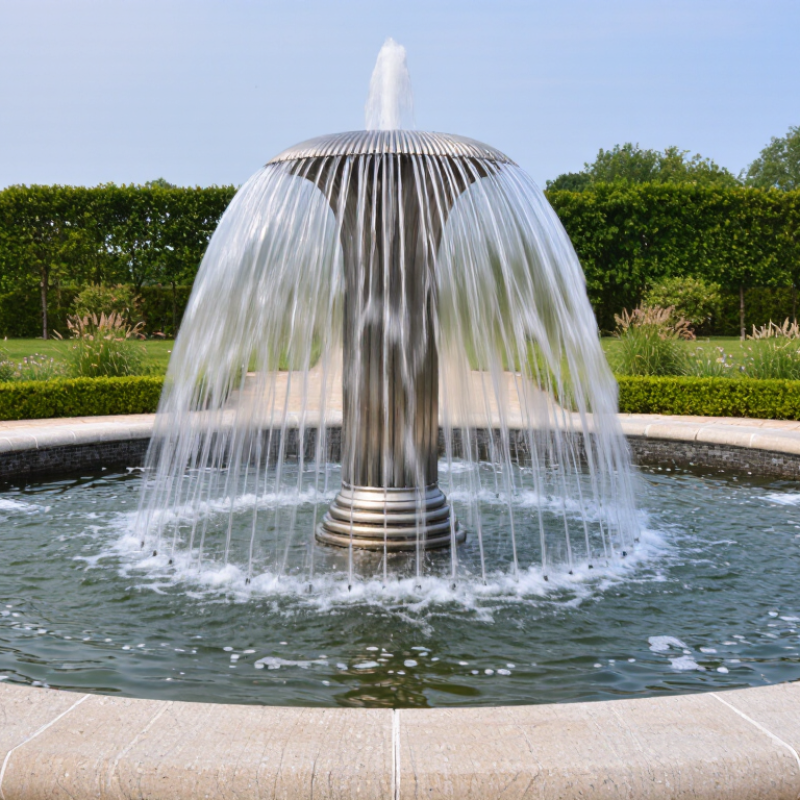
How to Choose the Right Cascade Fountain Nozzle

How Cascade Fountain Nozzles Shape Water Flow

How to Choose the Right Cascade Fountain Nozzle

How Cascade Fountain Nozzles Shape Water Flow

A cascade nozzle turns pump pressure into a defined water pattern. Its opening size and shape influence flow volume, stream thickness, and how cleanly water lands in a basin. In simple terms, flow through an orifice rises with its area and the square root of pressure. More pressure can sharpen a stream, but it can also increase splash and pump demand. Small changes matter.

The U.S. Department of Energy’s Improving Pumping System Performance: A Sourcebook for Industry (2006) reports that pumping systems can use 25–50% of energy in some industrial facilities. That range is not a fountain benchmark, but it highlights why nozzle choice and pump sizing should be considered together. Match the nozzle’s rated flow and pressure to the pump curve, then test the pattern at the actual installation height. A neat calculation can still miss a gust or an uneven basin.

Tips: Watch the landing zone. Check for splash on nearby paving, uneven tiers, and weak flow at the far edge. Adjust pressure gradually, and record the setting that gives an even cascade without excessive spray.

Assessing Fountain Size, Pool Depth, and Display Goals

How to Choose the Right Cascade Fountain Nozzle
Assessing Fountain Size, Pool Depth, and Display Goals

Match the nozzle to the pool, not just the pump. A broad cascade needs enough water volume to form an even sheet, while a narrow basin may suit a smaller, quieter flow. Check the pump’s output at the nozzle’s operating height; flow usually drops as water rises. Also measure the pool’s usable depth and width. A strong stream can splash over a shallow edge, especially on windy days. Leave room for ripples.

Decide what the display should feel like. A low, gentle spill can soften a patio, while a taller cascade creates more movement and sound. Tall displays need adequate depth to catch falling water without constant splashing. In practice, small changes in nozzle height or flow can alter the look more than expected. The first setup may look too forceful. Adjust it, then observe it from the seating area.

Tips: Measure the pool and nozzle height before buying. Test adjustable flow if possible. Keep the intake clear, and check for splash beyond the basin. A little unevenness can happen; water rarely behaves like a drawing.

Comparing Cascade Nozzle Designs and Spray Patterns

Cascade nozzles create different effects, even when installed in similar basins. A single-opening nozzle forms a clear, compact plume. Multi-opening designs divide the flow into several tiers, producing a broader, stepped cascade. Foam-style nozzles introduce air, making the water look fuller and brighter. The effect is visible. Yet a dense spray may need more flow and can lose its shape in wind.

Compare each pattern at the operating pressure recommended in its technical specifications. A narrow plume often suits a small basin, while a wide cascade needs room to land without splashing onto nearby paving. Wind changes everything. Fine droplets drift more easily; heavier streams usually stay more defined. Check the basin depth, pump capacity, and water filtration too. Debris can interrupt smaller outlets, and excessive pressure may turn a clean pattern into scattered spray.

Water use deserves attention alongside appearance. The U.S. EPA’s WaterSense at Work guide notes that landscape irrigation can account for about 30% of water use at commercial and institutional facilities; this is a broad benchmark, not a fountain-only figure. It supports checking actual flow rather than judging efficiency by appearance. Measure before deciding. I would still test the nozzle on site: catalog diagrams rarely capture local wind, splash, or the visual effect of a nearby wall.

Matching Nozzle Material, Flow Rate, and Pump Capacity

A cascade nozzle shapes water through its outlet, but material choice affects how well it holds up. Stainless steel suits exposed installations where corrosion resistance and a clean finish matter. Bronze can be durable, while compatible plastics may work for lighter-duty setups. Check water chemistry and manufacturer specifications before choosing; “corrosion-resistant” does not mean resistant to every water condition. Small details matter.

Match the nozzle’s recommended flow rate to the pump’s output at the installation’s total head, not its advertised maximum flow. Head includes lift and losses through pipes, elbows, and filters. Too little flow can flatten the cascade; too much can create splash, noise, and wasted energy. A bucket test can reveal whether the delivered flow is close to the target. The U.S. Department of Energy’s Improving Pumping System Performance sourcebook estimates that pumping systems use nearly 20% of global electricity demand. That figure covers many applications, not fountains, but it reinforces the value of avoiding oversized pumps. A neat-looking calculation can still mislead: pipe layout and dirty filters change performance, so recheck the flow after installation.

How to Choose the Right Cascade Fountain Nozzle

Match nozzle material, flow rate, and pump capacity

Estimates assume a 2 m/s outlet velocity; the pump target adds a 15% flow allowance. Select a pump that can deliver the target flow at the installation’s total dynamic head—not just at zero head. Choose a water-compatible material: stainless steel or bronze for durable metal construction, or suitable plastics where water chemistry and exposure allow. Confirm final requirements with the nozzle and pump specifications.

Checking Installation, Maintenance, and Operating Conditions

A cascade nozzle should be selected around the site’s actual water supply, not its appearance in a catalogue. Measure flow and pressure at the nozzle connection while the pump is running; static pressure alone can mislead. Check that the basin and mounting surface are level, since a small tilt can make one side of the sheet run thin. Watch the falling water in ordinary wind, too. A display that looks even indoors may drift outdoors.

Installation details matter. Keep the intake clear of leaves and grit, and confirm that pipe diameter and bends do not restrict flow.

The U.S. Department of Energy’s Improving Pumping System Performance: A Sourcebook for Industry reports that pumping systems use nearly 20% of global electricity. That figure is not specific to fountains, but it underscores why matching pump output to nozzle demand matters. Excess flow can waste energy and create splash beyond the basin.

Maintenance changes performance over time. Inspect screens, seals, and nozzle openings for mineral deposits; clean them without enlarging or scratching the orifice. Record the pump setting and water level after adjustment, then compare the cascade at the same conditions. I would recheck after seasonal changes. Small differences can matter. If the sheet stays uneven, verify pressure and alignment before replacing the nozzle; sometimes the cause is upstream, and that is easy to overlook.

FAQS

How should I choose a cascade nozzle size?

Match it to the pool’s width and usable depth, not just the pump. A wide cascade needs enough flow to form an even sheet.

Why does pump height affect the water display?

Pump output often drops as water rises. Check flow at the nozzle’s operating height while the pump is running.

How can I reduce splashing?

Make sure the basin can catch falling water, especially with a tall display. Check for splash beyond the edge on windy days. Leave room for ripples.

Does the pool need to be level?

Yes. A slight tilt can make one side of the water sheet look thin. Check the mounting surface and basin before changing the nozzle.

What should I check during installation?

Keep leaves and grit away from the intake. Also check pipe diameter and bends, since they can restrict flow.

How can I make the display quieter?

Try a lower spill and a gentler flow. Adjust the nozzle, then watch from the seating area; the first setup may feel too forceful.

How often should I inspect the nozzle?

Check the openings, screens, and seals for mineral deposits. Clean carefully without scratching or widening the nozzle opening.

What if the cascade still looks uneven?

Check pressure and alignment before replacing the nozzle. The cause may be upstream, which is easy to overlook. It happens.

How can I compare adjustments fairly?

Record the pump setting and water level, then compare the display under similar conditions. Recheck after seasonal changes; small differences can matter.

Conclusion

Choosing the right Cascade Fountain Nozzle begins with understanding how its design shapes the water’s height, spread, and overall movement. Consider the fountain’s size, pool depth, and the effect you want to create, whether that is a compact, gentle cascade or a broader, more dramatic display. Compare nozzle designs and spray patterns to find an option that suits the setting while keeping water within the basin.

Material, flow rate, and pump capacity should work together to produce a steady, attractive effect without overloading the system. Before making a choice, check that the nozzle is compatible with the installation, accessible for routine cleaning, and appropriate for local operating conditions. A careful match between the nozzle, pump, and fountain dimensions can help create a balanced display and make ongoing maintenance easier.

Oliver

Oliver

Oliver is a professional marketing specialist with a strong understanding of the company’s products, services, and customer-focused approach. With a background in market research, content strategy, and business communication, he transforms complex product information into clear, practical, and......