
0%

Choosing a Floating Lake Fountain starts with the lake, not the catalog.

The U.S. Environmental Protection Agency’s National Lakes Assessment evaluates nutrients, shoreline habitat, water clarity, and biological condition. These indicators matter because a fountain can improve circulation, but it cannot remove excess phosphorus or repair damaged shorelines. The U.S. Geological Survey also identifies nutrient enrichment and low dissolved oxygen as recurring threats in freshwater systems. Water movement must serve a wider management plan.

Dr. David E. Canfield Jr., a respected limnologist, has stated, “Aeration is not a substitute for nutrient control.” That warning deserves attention. A dramatic spray pattern may look effective while leaving deep, stagnant water untouched. I have seen lake owners focus on horsepower first, then discover that poor placement creates noise, weed disturbance, or uneven circulation. It is an easy mistake.

Start with lake size, average depth, shape, inflow points, and sensitive shoreline areas. Then compare motor horsepower, oxygen-transfer performance, electrical safety, anchoring, maintenance access, and warranty support. Ask for measured specifications, not only attractive photographs. Check whether the Floating Lake Fountain is designed for decorative display, circulation, aeration, or several purposes.

There is no universal model.

A small pond needs a different hydraulic pattern than a broad recreational lake. Wind direction matters. Seasonal turnover matters too. The best choice may look less spectacular, yet perform more consistently. That is worth questioning before purchase.
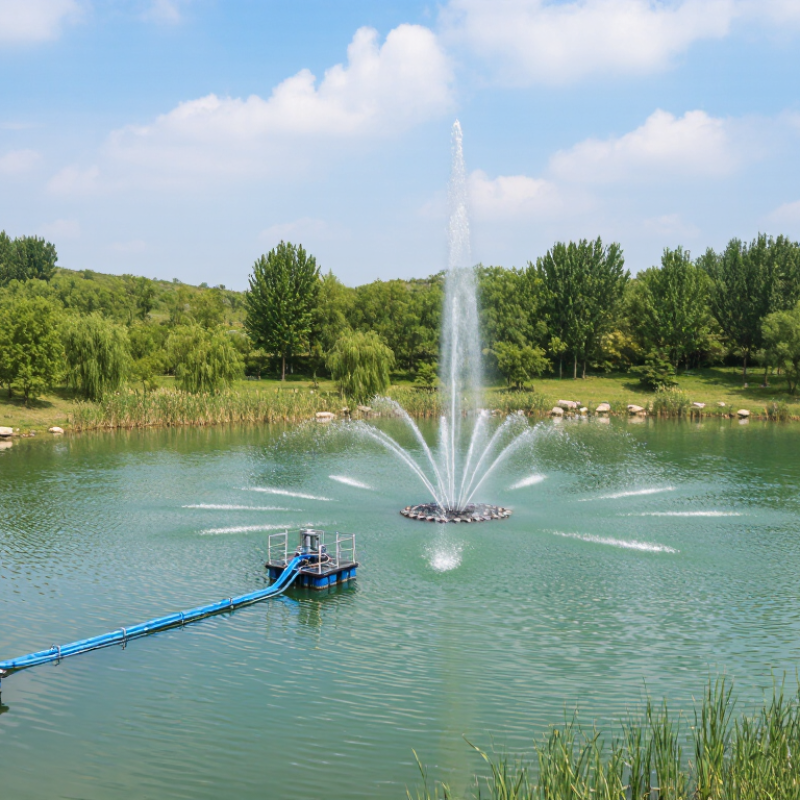
How to Choose a Floating Lake Fountain for Your Lake?

Assess Your Lake’s Size, Depth, and Water Conditions

How to Choose a Floating Lake Fountain for Your Lake?

Before choosing a floating lake fountain, measure the lake’s surface area and average depth. A narrow pond needs different equipment from a wide, open lake. Record depth at several points, especially near the planned fountain location. A quick shoreline estimate can mislead. Recheck your measurements after heavy rain, when water levels may change.

Water conditions also affect fountain performance. Muddy water, floating leaves, algae, and strong wind can block intake screens or reduce spray height. Check whether the lake has dense vegetation or soft sediment. A fountain placed too close to weeds may require frequent cleaning. In shallow water, select equipment designed for limited depth. In deeper water, confirm that the float, anchor, and electrical system suit the site. Never assume the deepest point is the best location.

Consider circulation, not only appearance. The fountain should move enough water to support oxygen exchange without creating dangerous currents. For irregular lakes, one fountain may leave quiet areas untouched. Water testing can reveal low oxygen, high nutrients, or unusual acidity. These details may change the equipment choice. An initial plan may still be imperfect, so observe water movement on calm and windy days. Ask a qualified installer to verify anchoring and electrical safety before operation.

How to Choose a Floating Lake Fountain for Your Lake?

Assess your lake’s size, depth, and water conditions before selecting fountain capacity.

Lake size: Larger lakes generally require higher circulation capacity and may benefit from multiple fountain units for more even coverage.
Water depth: Confirm the minimum dry-season depth at the installation point. Floating fountain intakes commonly need about 0.6–1.5 m of water, depending on unit size.
Water conditions: Heavy algae, leaves, sediment, and floating debris require accessible intake screens and more frequent cleaning.

Planning ranges shown are typical selection guidelines, not performance guarantees. Confirm flow rate, electrical requirements, anchoring, and minimum operating depth for the specific fountain design.

Define the Fountain’s Purpose and Desired Water Display

Before choosing a floating lake fountain, define what you need it to accomplish. A fountain may create a dramatic centerpiece, improve circulation, or support dissolved oxygen levels. These goals require different designs. A tall, narrow plume suits a formal entrance, while a wide, lower spray often looks better near cottages or walking paths. Do not choose by height alone.

I have seen property owners select powerful displays that looked impressive in product videos but felt oversized on smaller lakes. My first recommendation once made the same mistake. The spray blocked shoreline views and created excessive mist on windy afternoons. Measure the lake’s surface area, depth, shoreline distance, and prevailing wind direction. Then discuss circulation needs with a qualified water-management professional. Visual appeal cannot replace proper sizing.

The desired display should match the setting and maintenance plan. Choose a symmetrical pattern for a public-facing area, or a softer, irregular spray for a natural landscape. Consider nighttime lighting separately, since bright lights can disturb nearby residents and wildlife. Check electrical access, anchoring conditions, and safe operating zones before installation. A fountain that runs continuously may not be necessary. Timed operation can reduce energy use and limit wear. Small details matter. Observe the lake at different times, because wind, sunlight, and changing water levels may alter the display more than expected.

Compare Fountain Types, Spray Patterns, and Pump Performance

Choosing a floating lake fountain starts with the lake, not the catalog. Measure depth, shoreline distance, wind exposure, and available electrical service. A display fountain suits decorative goals, while an aerating fountain better supports oxygen transfer near the surface. Hybrid units can do both, but they may require more power and careful adjustment.

Spray patterns affect appearance, noise, and coverage. A narrow vertical plume looks precise and performs well in smaller areas. A wide crown pattern creates stronger visual movement across open water. Fan and trumpet patterns need more room, especially when wind pushes spray toward docks or nearby paths. I have seen attractive layouts fail because the spray drifted onto walkways. That detail matters.

Pump performance should be compared through flow rate, head height, wattage, and nozzle pressure. Flow rate shows water movement, but head height reveals how hard the pump must work. A pump with impressive peak flow may perform poorly against lifting resistance. Check the operating flow, not only the advertised maximum. Match the pump to the nozzle and power supply. Undersized wiring can cause voltage loss and overheating. Oversizing is not always better. It can increase operating costs, glare, and unwanted turbulence. Water quality also changes performance; algae and debris can restrict intake screens quickly. Build in an accessible cleaning routine. My first estimate would not be perfect without seasonal observations, because summer heat, changing water levels, and wind can alter the fountain’s real behavior.

Check Safety Features, Installation Needs, and Energy Use

Choosing a floating lake fountain involves more than spray height. Safety should guide every decision.

During site checks, measure water depth, shoreline distance, and nearby swimming areas. A fountain near a dock needs extra protection. Look for screened water intakes, sealed electrical connections, thermal overload protection, and ground-fault protection. These features reduce risks, but labels are not enough. Inspect cables for cuts, stiffness, or loose fittings before installation. A qualified electrician should verify the power supply and local requirements.

Installation conditions can change quickly. Floating units need enough depth beneath the pump and clear space around the intake. Strong wind may push the fountain toward rocks, boats, or shallow water. Use properly rated anchor lines and check them after storms. I have seen an attractive display fail because its anchor was too short. Access also matters. If cleaning requires a boat every week, maintenance may be neglected. That is an easy mistake.

Energy use deserves careful comparison. Check the motor’s wattage, operating hours, and expected water output. A taller spray often consumes more electricity. Timers can reduce runtime during low-traffic hours, while variable-speed controls may offer finer adjustment. Clogged screens also increase motor strain and energy use. I once assumed a newer pump would be efficient, but poor maintenance erased much of that advantage. Reliable records of power use can reveal the real cost over time.

Evaluate Maintenance Requirements, Durability, and Total Cost

Choosing a floating lake fountain requires more than comparing spray height and appearance. Maintenance, durability, and total cost often decide whether the equipment remains useful after several seasons. Inspect the motor housing, float material, power cable, and anchoring system carefully. Sealed components can reduce water intrusion, but no seal lasts forever. Ask how often filters, intake screens, and sacrificial anodes need inspection. A fountain that looks inexpensive may demand frequent cleaning and costly parts.

Tips: Remove leaves and algae from the intake every few weeks during active seasons. Check anchors after storms. Record electricity use monthly. Small records reveal expensive patterns. Keep spare fasteners available, because wet hardware can seize unexpectedly. Local water conditions matter too. Muddy water, hard water, and heavy nutrient growth can shorten service intervals.

Durability depends on construction and operating conditions. UV-resistant floats, corrosion-resistant fasteners, and protected wiring usually perform better near changing water levels. However, even strong materials can fail when ice, debris, or careless handling is ignored. I once underestimated winter storage needs; one cracked fitting created a larger repair than expected. Confirm whether the fountain can be removed safely before freezing weather. Calculate the full cost, including installation, electricity, cleaning labor, replacement parts, storage, and eventual disposal. A lower purchase price is not always the lower long-term cost. Ask for realistic service intervals, repair access, and written specifications from qualified suppliers.

How to Choose a Floating Lake Fountain for Your Lake? - Evaluate Maintenance Requirements, Durability, and Total Cost

Evaluation Factor Compact Decorative Fountain Standard Aerating Fountain Heavy-Duty Aerating Fountain Solar-Assisted Floating Fountain
Typical Lake Size Up to 0.5 acre 0.5–3 acres 3–10 acres Up to 2 acres, depending on sunlight
Primary Purpose Visual appeal and light water movement Aesthetic display and routine aeration Stronger circulation and oxygen transfer Decorative display with reduced grid-power use
Typical Flow Rate Approximately 100–250 gallons per minute Approximately 250–700 gallons per minute Approximately 700–1,500 gallons per minute Approximately 100–500 gallons per minute
Typical Spray Height 3–6 feet 5–10 feet 8–15 feet 3–8 feet
Electrical Demand 0.5–1.0 kW 1.0–2.5 kW 2.5–6.0 kW 0.3–1.5 kW, supported by solar charging
Recommended Operating Schedule 4–8 hours per day 6–12 hours per day 8–16 hours per day, subject to site conditions 4–10 hours per day, weather dependent
Routine Cleaning Frequency Every 4–8 weeks during the operating season Every 2–6 weeks during the operating season Every 2–4 weeks during the operating season Every 2–6 weeks; solar panels may need additional cleaning
Main Maintenance Tasks Remove leaves, inspect intake screen, check floats and cables Clean intake screen, inspect pump, check anchors and electrical connections Frequent intake cleaning, pump inspection, anchor checks, and cable inspection Clean intake, inspect pump, wash solar panels, and check battery connections
Seasonal Preparation Remove or secure before freezing conditions Remove or use an approved winterization procedure Professional winterization is recommended in freezing climates Protect panels, batteries, and pump from prolonged freezing conditions
Expected Service Life 5–8 years with proper care 7–12 years with proper care 10–15 years with proper care 5–10 years; batteries may require earlier replacement
Durability Considerations Best for sheltered water with low debris and moderate wind Suitable for normal wind, floating debris, and regular operation Designed for higher duty cycles, stronger circulation, and demanding conditions Performance depends on sunlight, battery condition, and weather exposure
Estimated Purchase Cost US$1,500–US$3,500 US$3,000–US$8,000 US$8,000–US$20,000 US$4,000–US$12,000
Estimated Installation Cost US$500–US$1,500 US$1,000–US$3,000 US$2,000–US$6,000 US$1,000–US$4,000
Estimated Annual Electricity Cost US$250–US$650 US$500–US$1,600 US$1,200–US$4,000 US$100–US$800
Estimated Annual Maintenance Cost US$150–US$400 US$250–US$700 US$500–US$1,500 US$300–US$1,000, including battery upkeep
Estimated Five-Year Total Cost US$3,750–US$9,750 US$7,250–US$22,500 US$18,000–US$57,500 US$8,500–US$33,000
Best Choice For Small ponds, gardens, and low-maintenance decorative projects Most residential and community lakes requiring balanced performance Large lakes, commercial properties, and high-aeration applications Sites with strong sunlight and limited access to grid electricity
Key Buying Check Confirm debris protection, anchoring, and winter storage requirements Compare pump efficiency, service access, warranty coverage, and replacement parts Verify electrical capacity, lifting equipment, anchoring design, and professional servicing Assess daily sunlight, battery replacement cost, panel area, and cloudy-weather performance
Cost assumptions: Estimates are shown in U.S. dollars and assume seasonal operation, routine owner maintenance, standard installation conditions, and electricity prices of approximately US$0.15–US$0.25 per kWh. Actual costs vary with lake size, water quality, operating hours, climate, access, electrical work, labor rates, and local regulations.

FAQS

What should a floating lake fountain accomplish?

It may create a centerpiece, improve water circulation, or support dissolved oxygen levels. Define the main goal before choosing equipment.

How should the spray pattern match the property?

A tall, narrow plume suits formal entrances. A wide, lower spray may fit cottages, paths, or natural shorelines better.

Why should owners avoid choosing by height alone?

A powerful display can overwhelm a small lake. It may block shoreline views and create heavy mist during windy afternoons.

What lake conditions should be measured before installation?

Measure surface area, depth, shoreline distance, and prevailing wind direction. Observe the lake under different sunlight and water-level conditions.

How can owners manage energy use and nighttime disturbance?

Use timed operation when continuous running is unnecessary. Keep bright lighting away from nearby homes and sensitive wildlife areas.

What maintenance tasks are commonly needed?

Remove leaves and algae from the intake every few weeks during active seasons. Check anchors after storms and inspect filters regularly.

Which construction details affect durability?

UV-resistant floats, corrosion-resistant fasteners, protected wiring, and sealed components can improve service life. Still, no seal lasts forever.

What costs should be included in the budget?

Include installation, electricity, cleaning labor, replacement parts, winter storage, and eventual disposal. A cheaper purchase may cost more later.

How should the fountain be prepared for winter?

Confirm whether it can be removed safely before freezing weather. Ice, debris, and careless handling can damage fittings and wiring.

What records can help reveal hidden problems?

Record electricity use, cleaning dates, repairs, and weather conditions. Small records help identify expensive patterns, though I might still miss one.

Conclusion

Choosing the right Floating Lake Fountain begins with understanding your lake’s size, depth, shape, and water conditions. These factors help determine the appropriate fountain capacity, anchoring method, and operating range. Next, clarify the fountain’s main purpose, whether it is intended to improve visual appeal, support water circulation, add aeration, or create a memorable display. Consider different fountain types and spray patterns, and compare pump performance to ensure the water movement and height match your expectations without excessive energy use.

Safety and installation requirements should also guide your decision. Look for stable construction, reliable electrical protection, secure cables, and installation methods suited to your lake environment. Before purchasing, evaluate how often the unit requires cleaning, inspection, and seasonal care. Durable materials can withstand weather and water exposure while reducing long-term repairs. Finally, compare the total cost, including equipment, installation, electricity, maintenance, and possible replacement parts, so your choice remains practical and efficient over time.

Ethan

Ethan

Ethan is a professional marketing specialist dedicated to helping businesses understand products, markets, and customer needs more clearly. With extensive knowledge of the company’s solutions, he combines product expertise, strategic thinking, and practical communication skills to create valuable......