 SymphonyFountains SymphonyFountains
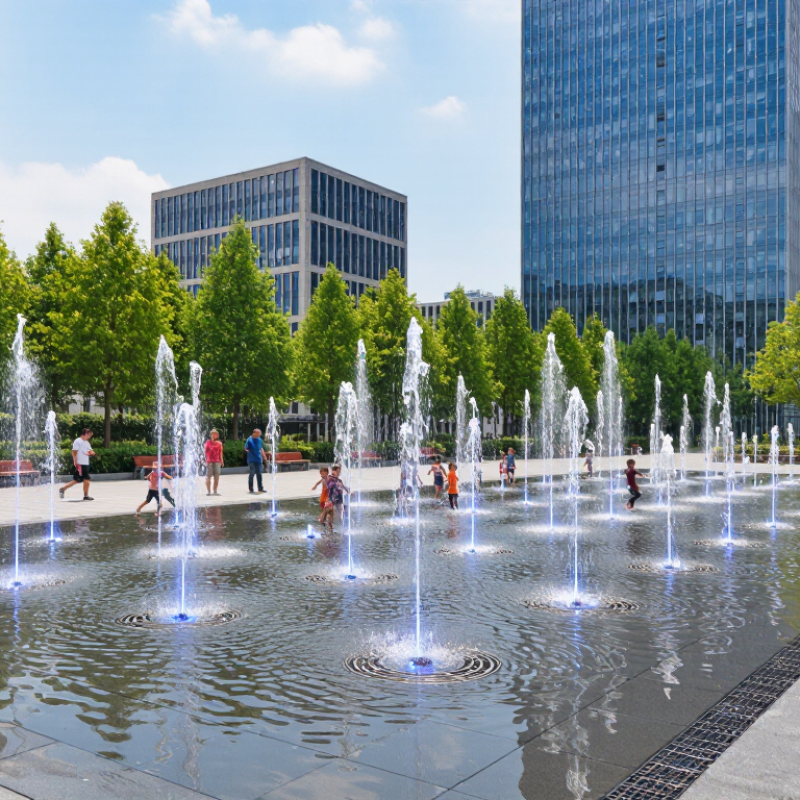
An Interactive Dry Deck Fountain can turn an ordinary plaza into a lively public destination. Water jets rise from flush nozzles, lights shift beneath wet paving, and children move safely through changing patterns. Yet visual excitement alone does not guarantee long-term value. Design decisions must also address safety, water quality, accessibility, maintenance, and operating costs.
Industry evidence supports this balanced approach. AECOM’s 2023 Theme Index and Museum Index reports show continued recovery in visitor attractions, increasing pressure to create memorable experiences. The World Waterpark Association’s benchmarking research also highlights operational efficiency, guest satisfaction, and maintenance performance as important business measures. These findings matter for fountains because a popular installation can quickly become expensive when filtration, drainage, controls, or replacement parts receive limited attention.
The U.S. Environmental Protection Agency’s WaterSense at Work guidance further encourages efficient water management in commercial facilities. That principle applies directly to recirculating fountain systems. Choose wisely.
This guide presents seven practical tips for selecting an Interactive Dry Deck Fountain, from nozzle layout and control technology to slip resistance and service access. It considers what visitors see, but also what operators handle every morning: clogged strainers, wet stone joints, changing weather, and unexpected shutdowns. Some recommendations may feel less glamorous than colorful lighting. They are often more important.
No system is perfect. Even a well-engineered fountain can expose weaknesses after heavy use. Careful evaluation, qualified installers, documented testing, and realistic maintenance planning can reduce those surprises while supporting a safer, more engaging public space.
7 Tips for Choosing an Interactive Dry Deck Fountain
Interactive dry deck fountains conceal pumps, pipes, and controls below a walkable surface. Their no-standing-water design suits plazas, hotels, parks, and family activity areas. The 2023 WHO/UNICEF Joint Monitoring Programme report states that 2.2 billion people lacked safely managed drinking water in 2022. Responsible water use is therefore a design requirement, not decoration.
Match the fountain type to user behavior. Flush-mounted jet grids create playful streams for children and public plazas. Laminar jets provide clean arcs for civic spaces and quiet courtyards. Mist systems cool waiting areas, but wind may wet nearby paving. Musical systems support events through programmed light and sound. They also require stronger controls. Check nozzle spacing, drainage slope, slip resistance, and accessible routes before approving the layout. Keep controls secure, but reachable for trained operators.
Choose variable-speed pumps and zoned controls to limit unnecessary flow. The U.S. EPA estimates household leaks waste over 10,000 gallons annually per home. That figure supports regular metering and fast repairs. Select corrosion-resistant components for easier maintenance. Confirm water-treatment requirements before installation. A first layout may look attractive yet fail during crowded periods. Review it under heat, wind, noise, and cleaning conditions. Small oversights become expensive.
| Tip | Interactive Dry Deck Fountain Type | How It Works | Typical Uses | Key Selection Criteria | Water and Maintenance Considerations | Best Fit |
|---|---|---|---|---|---|---|
| 1 | Programmable Jet Fountain | Individual nozzles produce vertical water streams that can be sequenced, varied in height, or synchronized with lighting. | Public plazas, civic spaces, shopping areas, parks, and event venues. | Check jet height, nozzle spacing, programmable controls, wind exposure, and viewing distance. | Uses a recirculating water system. Nozzle filters and collection channels require routine inspection to limit clogging. | Projects requiring dynamic shows and flexible visual programming. |
| 2 | Interactive Touch-Activated Fountain | Sensors detect movement, pressure, or user presence and trigger nearby jets or lighting effects. | Family recreation areas, playgrounds, community parks, and visitor attractions. | Evaluate sensor response time, accessibility, slip resistance, user capacity, and control-zone layout. | High public use increases the need for frequent cleaning, water-quality monitoring, and inspection of sensors and drains. | Sites where direct visitor participation is a central feature. |
| 3 | Mist and Fog Fountain | Fine droplets are dispersed through specialized mist nozzles to create a cooling or atmospheric effect. | Hot-climate plazas, outdoor dining areas, gardens, exhibitions, and shaded relaxation zones. | Consider humidity, wind conditions, droplet visibility, nozzle spacing, and proximity to electrical equipment. | Fine nozzles are sensitive to mineral deposits. Water filtration and periodic descaling are especially important. | Applications focused on cooling, ambience, or low-height water effects. |
| 4 | Laminar Flow Fountain | Produces clear, smooth water arcs or rods by stabilizing the flow through precision nozzles. | Architectural entrances, hotel forecourts, cultural sites, and premium landscape installations. | Review lighting integration, arc length, pump stability, nozzle precision, and protection from turbulence. | Stable water quality and accurate flow control are needed to preserve the smooth shape of the streams. | Designs requiring clean geometric forms and controlled water movement. |
| 5 | Musical and Light-Synchronized Fountain | Water movement, colored lighting, and programmed sequences are coordinated with sound or timed events. | Entertainment districts, public celebrations, destination landscapes, and performance spaces. | Assess control-system capability, speaker placement, light visibility, show duration, and local noise requirements. | More equipment means more inspection points, including pumps, lighting fixtures, controllers, drainage, and filtration. | Locations intended to create a landmark attraction or scheduled visitor experience. |
| 6 | Splash Pad Fountain | Flush-mounted or low-profile spray features release water from the deck for play without a deep pool. | Public aquatic play areas, recreational parks, resorts, and community facilities. | Prioritize slip-resistant surfaces, accessible routes, spray clearances, drainage capacity, and child safety. | Requires strong circulation, filtration, disinfection, rapid drainage, and regular sanitation checks because users contact the water directly. | Projects designed for active play and inclusive recreation. |
| 7 | Reflective and Sheet-Flow Fountain | A shallow water layer or controlled sheet flows across a level surface, creating reflection and gentle movement. | Memorials, courtyards, gardens, hospitality spaces, and quiet architectural settings. | Check surface levelness, evaporation rate, drainage design, edge detailing, and desired sound level. | Shallow water can evaporate quickly and may collect debris; concealed drains and accessible filtration improve maintenance. | Spaces seeking calm ambience, visual reflection, and low-profile water features. |
It hides pumps, pipes, and controls beneath a walkable surface. No standing water remains after operation. This improves access and reduces trip hazards.
They suit plazas, hotels, parks, courtyards, and family activity areas. Busy walkways need fast drainage. Nearby routes should remain clear and accessible.
Flush-mounted jet grids create playful streams from the ground. Adjustable heights can support different age groups. However, crowded periods may expose weak layout decisions.
Laminar jets produce clean, controlled arcs. They work well in civic spaces and quiet courtyards. Their calm appearance may suit areas needing less noise.
Mist systems can cool waiting areas during hot weather. Wind may wet nearby paving and reduce comfort. Test spray direction under real site conditions.
Check nozzle spacing, drainage slope, slip resistance, and accessible routes. Review the design during heat, wind, noise, and cleaning. Renderings alone are not enough.
Use variable-speed pumps and zoned controls. Meter water use and repair leaks quickly. Smaller flow settings can support useful effects without constant overuse.
Controls should coordinate pumps, valves, lights, sensors, and emergency stops. Test response times from several distances. Too much delay breaks the experience.
A manual override helps during cleaning, public events, or unexpected faults. Operators should see water levels, pump status, and alerts clearly. Accessible filters save time.
Unlimited effects may increase energy use, noise, and maintenance demands. An attractive layout can fail during crowded periods. Leave room for revision; early assumptions are often wrong.
Choosing the right Interactive Dry Deck Fountain requires more than selecting an attractive water display. Start by identifying the fountain type and its intended purpose, such as play, relaxation, visual enhancement, or community gathering. Carefully assess the available space, surface conditions, drainage, surrounding traffic, visibility, and safety needs. Consider how water features, lighting, sensors, controls, and interactive functions will work together to create an engaging experience for users of different ages and abilities.
Long-term performance is equally important. Select durable, slip-resistant, and weather-appropriate materials that support accessibility and simplify cleaning, inspections, and repairs. Review the installation process, equipment requirements, energy consumption, water management, and expected maintenance costs before making a decision. A slightly higher initial investment may provide better reliability, lower operating expenses, and greater value over time. By balancing creativity, safety, usability, durability, and budget, you can choose an Interactive Dry Deck Fountain that remains enjoyable, efficient, and practical for years.