 SymphonyFountains SymphonyFountains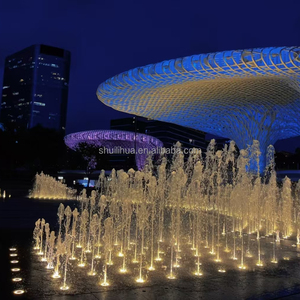
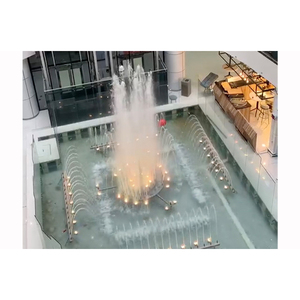
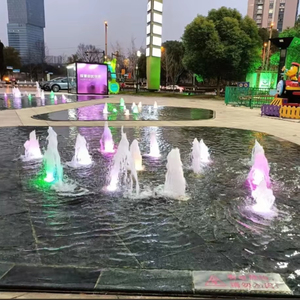
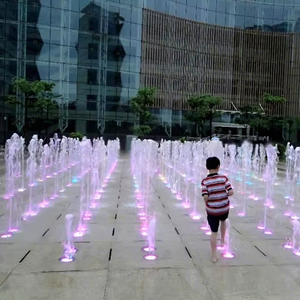
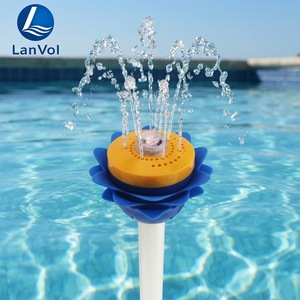
In modern commercial landscape design, civic water plazas, and municipal musical fountain spectacles, finger fountain nozzles (often designated technically as fan-jet multi-stream distributors or peacock-tail nozzles) represent a critical architectural element. Characterized by their distinct fan-shaped trajectory array, finger nozzles discharge multiple solid-stream clear jets diverging symmetrically from a single pressurized manifold header.
From a fluid dynamics perspective, securing a flawless finger fountain display demands strict control over jet cohesion, pressure distribution, and boundary-layer turbulence. Leading Chinese fountain nozzle manufacturers have transitioned from legacy sand-casting techniques to advanced CNC multi-axis precision machining. This technological pivot eliminates micro-fissures, internal roughness, and dimensional deviations that historically caused premature jet dispersion, atomization, or stream distortion.
The performance of a finger fountain nozzle array depends on maintaining laminar fluid acceleration through each individual orifice channel. The hydraulic discharge coefficient ($C_d$) must remain above 0.96 to prevent internal turbulence. The flow rate ($Q$) for an $N$-finger nozzle assembly is modeled as:
$Q = N \cdot C_d \cdot A_o \cdot \sqrt{2gH}$
Where $N$ represents the number of finger outlets (typically 5, 7, 11, 17, or 21 jets), $A_o$ is the individual orifice cross-sectional area, $g$ is gravitational acceleration, and $H$ is the total hydraulic head pressure. China's top tier suppliers utilize Computational Fluid Dynamics (CFD) modeling software—such as ANSYS Fluent—to optimize internal flow channels, ensuring balanced velocity profiles across every finger jet without pressure starvation at the perimeter orifices.
Eliminates internal turbulence and flow restriction, achieving uniform stream height across all radiating fingers.
Offers extreme resistance against chloride pitting, chemical water treatments, and marine environment oxidation.
Engineered for high-frequency dynamic response during musical choreography and variable-speed pumping cycles.
Global B2B procurement managers, landscape architects, and municipal EPC contractors seeking to import finger fountain nozzles from Chinese suppliers must evaluate technical capabilities beyond basic unit pricing. The gap between tier-1 OEM manufacturers and standard trading suppliers lies in metallurgical integrity, machining tolerances, and standardized Quality Assurance (QA) protocols.
Material choice directly dictates project longevity. While standard indoor features can operate efficiently using polished Marine Brass (CW617N) or AISI 304 Stainless Steel, outdoor public spaces, coastal plazas, and dry deck splash pads require premium AISI 316L stainless steel.
| Material Grade | Tensile Strength (MPa) | Corrosion Resistance Index | Ideal Application Environment | Machining Tolerance Range |
|---|---|---|---|---|
| AISI 316L Stainless Steel | 520 - 680 | Extreme (PREN ≥ 25) | Coastal lakes, chlorinated public pools, dry fountains | ± 0.02 mm (CNC Lathe) |
| AISI 304 Stainless Steel | 500 - 620 | High (PREN ~ 19) | Freshwater lakes, indoor commercial features | ± 0.03 mm (CNC Lathe) |
| Solid Machined Brass | 380 - 450 | Moderate (Requires Chrome Plating) | Architectural garden pools, decorative ponds | ± 0.05 mm (Traditional Milling) |
Best-in-class Chinese factories perform automated passivating baths and electro-polishing on all stainless steel nozzle components. This specialized surface finishing rebuilds the protective chromium oxide film, extending service life in aggressive water chemistry conditions.
The fountain design industry is experiencing a massive shift toward energy conservation, digital twin simulation, and multi-sensory show integration. Procuring teams must align their component specifications with upcoming technological trajectories:
New nozzle geometries reduce head loss by 22%, allowing smaller submersible pumps to produce equivalent stream heights.
Leading suppliers provide native Revit, STEP, and CAD 3D models with pre-calculated hydraulic metadata for instant engineering integration.
Tool-less internal filter baskets enable maintenance crews to clean debris within seconds, cutting municipal maintenance costs.
Static water displays are rapidly being replaced by dynamic, music-synchronized dancing fountains. Modern finger nozzles must handle rapid pressure transients induced by Variable Frequency Drives (VFDs) without stream breakup. Leading Chinese manufacturers now incorporate internal flow-stabilizing vanes and dampening chambers within the nozzle body. This engineering enhancement allows finger nozzles to instantly transition from low, subtle fan spreads to soaring, high-impact peacock arcs in fraction-of-a-second musical cues.
When partnering with top-tier Chinese musical fountain manufacturers—such as Symphony Fountains and accredited OEM/ODM engineering facilities—global clients leverage a fully integrated turnkey ecosystem. By eliminating multi-vendor fragmentation, project risks are drastically reduced.
Top Chinese suppliers do not merely ship components; they provide comprehensive engineering documentation, 3D walkthrough renderings, civil installation schematics, and on-site commissioning assistance worldwide. From high-capacity floating fountains spanning 180 meters on urban lakes to complex dry deck plaza fountains, single-source accountability ensures smooth execution.
Need technical assistance, 3D CAD models, hydraulic calculations, or factory-direct price quotations for your upcoming project? Connect directly with our Senior Fountain Engineering Team today.
Contact Us