 SymphonyFountains SymphonyFountains
 Engineered for high Oxygen Transfer Rates (OTR), dynamic aesthetic displays, and heavy-duty continuous industrial performance.
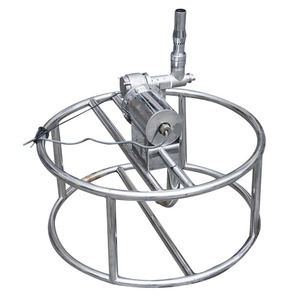
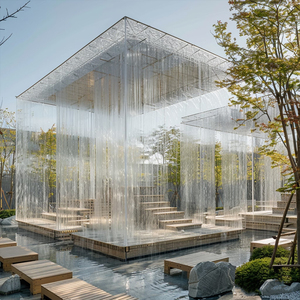
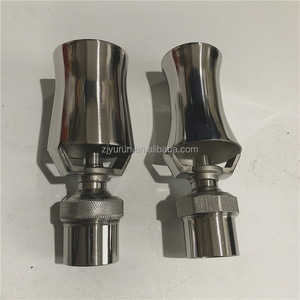
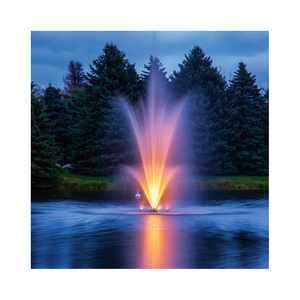
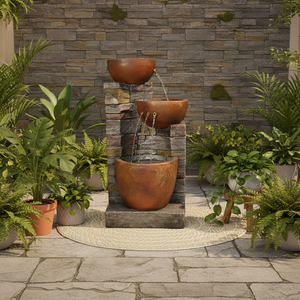
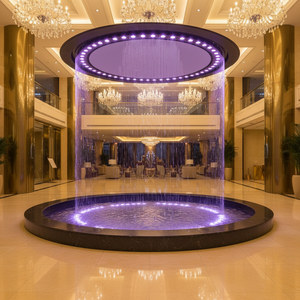

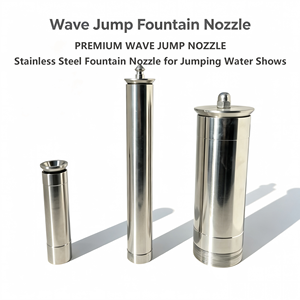
As municipal developers, commercial landscape architects, and industrial wastewater managers increasingly focus on ecological restoration, the demand for high-efficiency floating fountain aerators has reached unprecedented heights. A floating fountain aerator serves a vital dual function: it transfers essential atmospheric oxygen into stagnant water bodies to elevate Dissolved Oxygen (DO) levels while delivering a striking aesthetic water display that transforms public spaces, golf courses, resort lakes, and commercial retention basins.
Unlike fixed-bottom diffusers or stationary aeration rigs, floating fountain aerators automatically adjust to fluctuating water levels. Constructed with high-density UV-stabilized polyethylene (HDPE) pontoons and marine-grade AISI 304/316 stainless steel enclosures, these units deliver robust, continuous operation even in challenging aquatic environments with high mineral salinity or variable pH levels.
By drawing nutrient-rich water from lower thermal strata and atomizing it into fine spray droplets, our high-speed axial impellers maximize the surface-area-to-volume ratio, dramatically accelerating oxygen dissolution.
Precision CNC-machined dynamic impellers eliminate destructive cavitation bubbles, reducing hydraulic drag, minimizing motor stress, and ensuring whisper-quiet acoustic profiles during continuous operation.
Fully compatible with modern smart control panels, allowing operators to dynamically adjust water spray heights, flow volumes, and energy consumption based on real-time DO sensor feedback.
When purchasing floating fountain aerators at wholesale volumes, fragmented supply chains often cause component mismatches, premature pump failures, and split vendor liability. We eliminate these risks through single-source manufacturing and end-to-end engineering integration.
From 304/316 SS nozzle headers to custom pontoon frames, every metal component is laser-cut and robotically welded in our modern Vadodara production hub, ensuring tight tolerances and seamless quality control.
Our engineering teams successfully delivered a massive 180-meter floating fountain assembly at Hussain Sagar, proving our capacity to manufacture, balance, and stabilize large-scale floating platforms for major public works.
Our custom underwater IP68 RGB/RGBW LED fixtures are thermally managed to work seamlessly alongside aeration impellers, producing vibrant visual spectacles without compromising hydro-cooling efficiency.
To help B2B procurement managers, civil engineering contractors, and environmental consultants select the optimal system, the matrix below details key performance metrics across common water management solutions:
| Technology Type | Oxygen Transfer Efficiency (SOTE) | Visual & Aesthetic Value | Circulation Depth Range | Installation Complexity | Maintenance Requirements |
|---|---|---|---|---|---|
| Floating Fountain Aerator | High (1.2 - 1.8 kg O₂/kWh) | Exceptional (Decorative Spray & Lighting) | 1.0m to 4.5m Depth | Low (No basin drainage required) | Low (Self-clearing intake screens) |
| Surface Paddlewheel Aerator | Medium (0.9 - 1.3 kg O₂/kWh) | Utilitarian (Minimal aesthetic) | 0.5m to 1.5m Shallow | Low (Floating rig) | Moderate (Gearbox wear) |
| Submerged Bottom Diffusers | High in deep waters (>4m) | None (Sub-surface bubbles only) | > 3.0m Deep stratums | High (Trenching & air piping) | High (Diffuser clogging) |
| Static Decorative Fountain | Low (< 0.5 kg O₂/kWh) | High (Intricate choreographies) | Top surface layer only | Medium (Fixed basin required) | Moderate (Fine nozzle maintenance) |
The global market for floating fountain aerators is shifting toward sustainable, high-efficiency, smart-monitored systems. Importers and wholesalers must align their supply lines with these technological advances:
Rising energy costs drive adoption of direct-drive DC brushless floating aerators coupled with floating solar panels, eliminating grid connection expenses for remote agricultural ponds and eco-resorts.
Next-generation units feature integrated RS485/Modbus optical DO sensors. The aerator dynamically adjusts motor speed based on dissolved oxygen levels, optimizing power consumption.
To resist aggressive industrial effluents and hypersaline coastal lagoons, manufacturers are replacing standard 304 SS with Duplex 2205 stainless steel and carbon-reinforced UV-stabilized polymer floats.
Achieving effective aeration goes beyond spraying water into the air. True ecological restoration relies on continuous gas transfer at the air-water interface and destratifying stagnant thermal layers.
When stagnant water undergoes thermal stratification during warmer months, a dense, oxygen-depleted bottom layer (the hypolimnion) forms beneath a warmer top layer (the epilimnion). This anoxic environment triggers toxic anaerobic decomposition, releasing foul-smelling hydrogen sulfide ($H_2S$) gas and fostering excessive blue-green algae blooms.
Our wholesale floating aerators incorporate high-velocity axial-flow propellers that draw oxygen-starved water from deeper zones and draft it upward through wide-throat draft tubes. As water plumes into the atmosphere, oxygen absorbs rapidly while volatile gases escape, effectively breaking down thermal stratification and suppressing harmful algal growth.
Direct technical answers to help engineering contractors, developers, and wholesale buyers streamline specification and ordering processes.
Sizing depends on surface acreage, average depth, organic load, and specific DO targets. As a general rule of thumb for commercial water bodies, plan for 1.5 to 2.0 HP per surface acre for decorative aeration, or 2.5 to 4.0 HP per surface acre for heavy biological wastewater treatment or high-density aquaculture ponds.
Yes. For saltwater, coastal lagoons, or high-salinity industrial effluent, we customize construction using AISI 316L or Duplex stainless steel components, replace standard mechanical seals with Silicon Carbide (SiC/SiC) double seals, and equip floats with sacrificial zinc anodes to prevent galvanic corrosion.
We manufacture custom power setups to match international standards: 220V/240V/380V/415V/440V/480V at both 50Hz and 60Hz. Submersible motors can be configured for single-phase (up to 3HP) or three-phase power supplies, and are supplied with marine-grade waterproof rubber cables (VDE/UL certified).
Floating aerators pull warmer water from deeper zones and create continuous surface agitation, keeping a surrounding radius of water open and ice-free during sub-zero temperatures. In regions with severe freezing, units can remain operational as de-icers or be easily unmoored and stored until spring.
Buying direct from our manufacturing facility gives you factory-direct pricing, complete OEM/ODM customization (including custom spray patterns, float colors, and control boxes), rigorous Factory Acceptance Testing (FAT), and reliable long-term spare parts supply without distributor markups.
Floats, motor housing, and nozzle assemblies are built as modular units. High-density polyethylene pontoons stack efficiently, while motors, nozzles, and control panels are packed in IPPC-certified ISPM-15 fumigated wooden crates, maximizing container loading density (20GP/40HQ) and preventing transit damage.
Yes. Spray pattern heights can be regulated by adjusting interchangeable nozzle inserts or controlling pump motor RPM using a Variable Frequency Drive (VFD) inside the main control panel.
Thanks to our debris-shredding suction screens, routine maintenance is minimal. We recommend inspect intake screens quarterly for biological fouling, checking mechanical seal oil levels annually, and replacing protective zinc anodes when worn past 50% volume.
Partner with a trusted China wholesale manufacturer. Contact our application engineering team today for technical CAD drawings, customized hydrodynamic calculations, and factory-direct price quotes.