Top China Fountain Wind Sensor Supplier & Engineering Solutions

Industrial-Grade Ultrasonic & Mechanical Anemometry for Real-Time Hydraulic Drift Control, Water Conservation, and Architectural Fountain Protection

Precision Hydro-Control Equipment

Featured Water Feature Systems & Sensor Accessories

Explore our technical hardware catalog for commercial plazas, lake floating fountains, dry decks, and digital water screen shows.

Water Crown Stainless Steel Modern Animal Design Interactive LED Dry Ground Fountain Spray System for Plaza Kids Playground

Water Crown Stainless Steel Modern Animal Design Interactive LED Dry Ground Fountain Spray System for Plaza Kids Playground

Outdoor Programmable Music-Dancing Water Fountains Garden Equipment Made of Stone Stainless Steel Customizable Size for Sale

Outdoor Programmable Music-Dancing Water Fountains Garden Equipment Made of Stone Stainless Steel Customizable Size for Sale

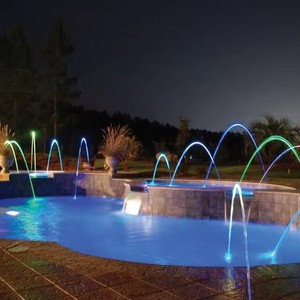
Laminar Jumping Jet Fountain Nozzle DMX Lights Colorful LED Lights Laminar Flow Water Jets Fountain Jumping Jets for Pool

Laminar Jumping Jet Fountain Nozzle DMX Lights Colorful LED Lights Laminar Flow Water Jets Fountain Jumping Jets for Pool

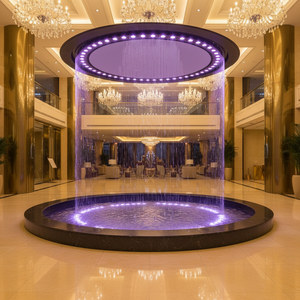
Digital Water Curtain Engineering Projects Circular Fiber Optic CNC Landscape Decoration Colorful Outdoor Water Feature

Digital Water Curtain Engineering Projects Circular Fiber Optic CNC Landscape Decoration Colorful Outdoor Water Feature

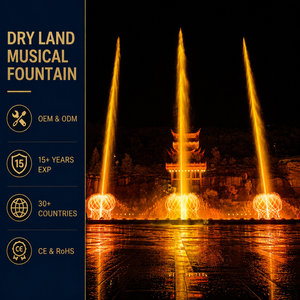
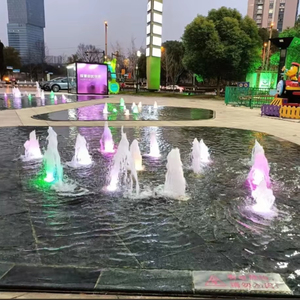
High Quality Programmable Colorful LED Dry Deck Water Feature Commercial Plaza Ground Dry Land Musical Fountain

High Quality Programmable Colorful LED Dry Deck Water Feature Commercial Plaza Ground Dry Land Musical Fountain

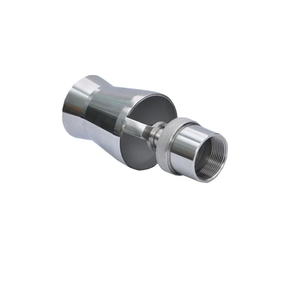
Modern Stainless Steel Digital Jumping Jets Musical Dancing Water Fountain Indoor/Outdoor Home Use Adjustable Ice Tower Nozzle

Modern Stainless Steel Digital Jumping Jets Musical Dancing Water Fountain Indoor/Outdoor Home Use Adjustable Ice Tower Nozzle

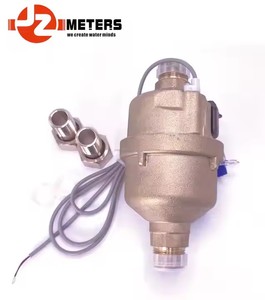
Volumetric Domestic Dry Type Multi-Jet Digital Rotary Piston Brass OEM Water Meter

Volumetric Domestic Dry Type Multi-Jet Digital Rotary Piston Brass OEM Water Meter

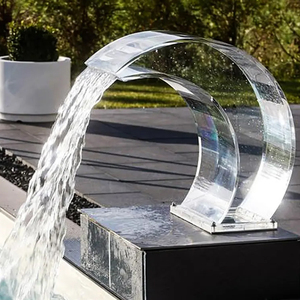
Custom Waterfall Fountain Indoor Outdoor 15w Acrylic Waterproof Ip65 Waterfall Fountain With Led Lights

Custom Waterfall Fountain Indoor Outdoor 15w Acrylic Waterproof Ip65 Waterfall Fountain With Led Lights

< 50ms
PLC Response Time
IP68
Submersible & Weatherproof
35%
Water & Energy Savings
100+
Global Project Deployments

Engineering Whitepaper: The Essential Role of Fountain Wind Sensors in Modern Water Features

In large-scale commercial water features, urban plaza dry deck fountains, and high-jet floating lake spectacles, atmospheric wind vectors present one of the most critical structural and operational challenges. Uncontrolled wind velocity causes hydraulic drift, blowing high-velocity water streams beyond intended basin boundaries. This leads to severe spectator wetting, structural moisture degradation, soil erosion around perimeter landscaping, and excessive water loss through airborne evaporation. Partnering with a premier China fountain wind sensor supplier ensures access to specialized anemometry technologies engineered explicitly to mitigate these dynamic hydro-environmental risks.

Information Gain Insight: Standard meteorological anemometers fail prematurely when installed within fountain spray zones due to continuous micro-droplet saturation, chemical water treatment agents (chlorine/bromine), and aggressive turbulence. Purpose-built fountain wind sensors incorporate marine-grade 316L stainless steel housings, ultrasonic transit-time measuring elements, and heating elements to prevent sensor blinding and mechanical bearing seizure.

Modern automated fountain control systems depend on real-time feedback loops between meteorological wind sensors and Programmable Logic Controllers (PLCs) governing Variable Frequency Drives (VFDs). When ambient wind velocity breaches predefined safety thresholds, the wind sensor instantly transmits analog (4-20mA, 0-10V) or digital (RS485 Modbus RTU) signals to the central control panel. The control algorithm automatically reduces pump speed—stepping down jet discharge heights in direct proportion to wind intensity—or completely safely shuts down vertical high-shooter jets until baseline wind speeds return to normal operating limits.

Fountain Wind Sensing Technologies: Ultrasonic vs. Mechanical Anemometers

Selecting the optimal anemometry hardware for architectural and entertainment water features requires evaluating site micro-climates, maintenance accessibility, and integration requirements. Leading Chinese OEM manufacturers offer two primary sensor architectures optimized for fountain applications:

Solid-State Ultrasonic Sensors

Utilizes acoustic pulse transit times across multi-axis transducers. No moving parts eliminate mechanical wear, making them ideal for high-humidity, spray-heavy environments requiring zero maintenance.

Heavy-Duty Cup & Vane Sensors

Precision-balanced mechanical anemometers featuring low-friction magnetic encoders and optical sensors. Engineered with IP65/IP67 sealed bearings for cost-effective wind speed monitoring.

Integrated VFD Controller Packages

Complete control panels combining anemometer feedback with pre-configured PLC logic cards. Features customizable multi-stage speed reduction curves and wind direction compensation.

Global Sourcing & Industry Trends (2025–2030)

As smart urban infrastructure and sustainable commercial landscapes dominate global architectural development, the requirements for fountain wind control systems are evolving rapidly. Procurement managers, engineering contractors, and landscape designers must adapt to several emerging industry shifts:

1. AI-Driven Predictive Micro-Climate Modeling

Next-generation fountain wind control systems are transitioning from reactive throttling to predictive adjustment. By pairing real-time ultrasonic wind sensors with cloud-connected machine learning edge nodes, control systems analyze incoming wind gusts seconds before they impact the water column, adjusting nozzle pressure preemptively to prevent spray drift entirely.

2. Direct Industrial IoT (IIoT) & BMS Protocol Convergence

Modern municipal developments require centralized oversight via Building Management Systems (BMS). Leading Chinese fountain wind sensor manufacturers now standardize native support for Modbus TCP/IP, BACnet MS/TP, and MQTT protocols, allowing direct integration into smart city dashboards alongside digital water curtain setups and interactive dry deck systems.

3. Eco-conscious Water Management & Evaporation Savings

With water conservation regulations tightening across arid regions (such as the Middle East, North Africa, and Western United States), commercial water features must document minimal water loss. Dynamic wind-speed throttling reduces evaporative drift losses by up to 40%, directly lowering utility expenses and environmental footprints.

  • Multi-stage Hysteresis Logic: Prevents rapid, jerky pump speed fluctuations caused by turbulent wind gusts, ensuring smooth aesthetic transitions.
  • Dual-Vector Sensing (Speed & Direction): Allows selective throttling of nozzles facing leeward or windward directions rather than lowering the entire fountain show.
  • Corrosion Resistant Metallurgy: Anodized aluminum alloys and 316L stainless steel constructions built to withstand coastal salt air and aggressive chemical water treatments.

Why Partner with Top-Tier China Fountain Wind Sensor Suppliers?

China has established itself as the global epicentre for hydro-technological equipment manufacturing, combining advanced electronics production, precision CNC machining, and comprehensive hydraulic research facilities under one unified ecosystem. When sourcing fountain wind sensors and associated water feature controls from established Chinese manufacturers, global engineering firms secure significant strategic advantages:

End-to-End Vertical Integration

From component-level circuit design to hydraulic performance testing rigs, top Chinese suppliers manufacture nozzles, underwater LED lighting, submersible pumps, and wind sensors under one roof, guaranteeing 100% system compatibility.

Rigorous Environmental Stress Testing

Sensors undergo intensive thermal cycling, salt-spray corrosion chamber exposure, IP68 immersion validation, and high-velocity wind tunnel calibration prior to factory acceptance testing (FAT).

Unrivaled Cost-to-Performance Ratio

Direct factory sourcing eliminates intermediary markups while delivering robust industrial-grade equipment compliant with global safety standards (CE, RoHS, ISO9001).

Whether you are designing a high-impact municipal water screen projection system, an interactive children's dry deck fountain, or a high-pressure laminar jet display, integrating purpose-built wind sensing hardware ensures long-term operational safety, visitor comfort, and reduced maintenance overhead.

Frequently Asked Questions (FAQ) for Sourcing Fountain Wind Sensors

How does a fountain wind sensor communicate with VFD pump control panels?
Fountain wind sensors output standardized industrial control signals such as 4-20mA current loops, 0-10V DC analog signals, or digital RS485 Modbus RTU communications. These inputs connect directly to the analog/digital expansion cards of the main fountain PLC. The PLC script compares the signal against pre-programmed wind velocity setpoints and modulates the 0-60Hz frequency output of the VFDs controlling pump discharge pressure.
What is the recommended installation location for a fountain wind sensor?
Sensors should be mounted on a rigid pole at a height of 3 to 5 meters above ground level in an unobstructed position adjacent to the main water basin. It must be situated away from localized tall buildings, trees, or structural overhangs that generate artificial wind eddies, while remaining outside the direct trajectory of high-pressure vertical water nozzles.
Why are ultrasonic wind sensors preferred over mechanical cup anemometers in fountain applications?
Mechanical cup anemometers contain rotating bearings vulnerable to spray drift, mineral scale buildup, chemical corrosion, and mechanical freezing. Ultrasonic wind sensors possess zero moving parts, utilizing acoustic wave propagation to calculate wind velocity and direction instantaneously. This solid-state architecture guarantees maintenance-free operation and eliminates performance degradation caused by ambient moisture saturation.
Can wind sensors selectively control specific nozzle groups during wind events?
Yes. With multi-axis wind direction sensing and modern PLC programming, control systems can selectively throttle only the windward nozzle groups or high-altitude center shooters while allowing low-profile perimeter jets, misting systems, or laminar jumping jets to operate normally, maintaining visual interest while preventing water drift.
What hysteresis settings should be configured to prevent continuous pump cycling?
Hysteresis introduces a stabilizing time delay and velocity buffer between state transitions. A standard configuration includes a 5-second wind gust delay before stepping down pump frequency and a 30-to-60-second recovery timer after wind drops below the safety threshold. This prevents erratic pump hunting and electrical strain on VFD drive modules.
What custom OEM services do Chinese fountain wind sensor suppliers offer?
Leading suppliers offer turnkey OEM/ODM services, including customized sensor mounting brackets, specialized marine-grade 316L stainless steel enclosures, custom signal protocol firmware (e.g., BACnet, Profibus), pre-configured PLC control panels, and custom-branded documentation packages for project contractors.

Upgrade Your Fountain Projects with Precision Wind Control

Partner with China's leading fountain equipment manufacturer. Request our comprehensive technical engineering catalog, CAD layout drawings, and direct factory pricing for your upcoming commercial projects.

Get Catalog