 SymphonyFountains SymphonyFountains
 OEM/ODM Factory Direct Wholesale Hardware Engineered for Precision Timing, High Refresh Rates, and Extreme Environmental Durability in Japan
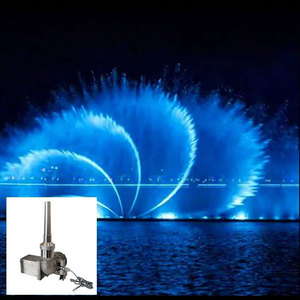
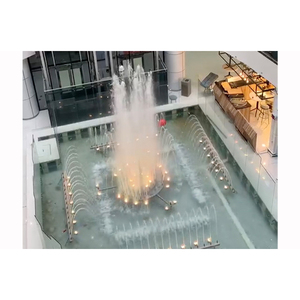
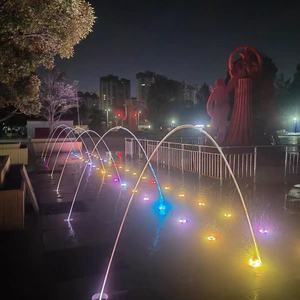
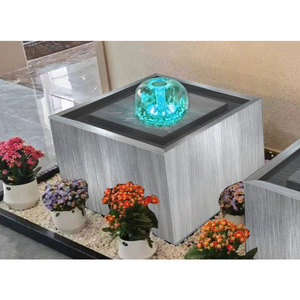
Architectural water feature engineering in Japan has undergone a fundamental structural shift. Modern Japanese urban planners, commercial real estate developers, and municipal park boards are moving away from traditional static or basic analog relay-operated fountains toward highly responsive, low-latency, dynamic musical water theater installations. At the core of this technological evolution sits the DMX512-A / RDM (Remote Device Management) master controller paired with high-speed Ethernet-to-DMX nodes (Art-Net and sACN protocols).
In high-density commercial centers such as Tokyo, Osaka, Yokohama, and Fukuoka, public spatial design demands an unprecedented level of control precision. Fountains are no longer treated merely as decorative water elements; they function as interactive visual performance art, integrated with outdoor LED architectural projection mapping, lasers, and spatial audio systems. Achieving millisecond-level synchronization across variable frequency drives (VFDs), fast-response solenoid valves, high-speed 1D/2D/3D stepper-motor digital nozzles, and RGBW/RGBA underwater LED illumination requires robust industrial-grade controller architecture manufactured to exacting standard tolerances.
When sourcing fountain DMX controllers from China manufacturers for installation in Japanese environments, B2B buyers must prioritize structural reliability, optical signal isolation, thermal endurance, and protocol flexibility. This whitepaper breaks down the essential technical considerations, localized application scenarios, regulatory compliance frameworks, and manufacturing capabilities defining top-tier OEM suppliers.
Modern DMX controllers designed for large-scale water shows differ significantly from off-the-shelf theatrical consoles. They combine dedicated real-time microprocessors with multi-universe Ethernet connectivity, industrial PLC backup logic, and custom software interfaces capable of visual sequencing.
Complex musical fountains utilizing dozens of 3D digital swivel nozzles and hundreds of pixel-controllable RGBW underwater lights rapidly consume physical DMX universes. Industrial master controllers support 16 to 128 DMX universes over high-speed Ethernet (Art-Net III/IV, E1.31 sACN), transmitting data at up to 44 Hz frame rates without packet dropping.
Water environments present significant risks of ground loops and high-voltage surges generated by high-power submersible pumps driven by VFDs. Chinese B2B direct-factory controllers feature photoelectric optical isolation on every RS-485 output port, safeguarding master CPU boards against back-EMF spikes and transient voltage surges up to 10kV.
For municipal landmarks and commercial plazas in Japan where show downtime is unacceptable, control systems utilize a dual-master redundant topology. An industrial PLC monitors controller heartbeats via Modbus TCP. Should the main DMX server experience a fault, control automatically shifts to the backup unit within 15 milliseconds.
Directing water column height via DMX requires specialized variable frequency drive control curves. Controllers translate standard 0-255 DMX values into ultra-smooth 0-100Hz frequency ramps, matching the mechanical inertia of high-flow fountain pumps to prevent hydraulic hammer and water burst shock.
Remote Device Management (ANSI E1.20) integration allows operators to monitor underwater light temperatures, decoder voltage draw, solenoid valve switching counts, and stepper motor operating angles remotely without requiring physical divers or maintenance technicians in the basin.
Achieving pristine audio-to-water synchronization requires robust clock master interfacing. Controllers accept external SMPTE / LTC timecode or MIDI signals directly from professional soundtrack players, ensuring that fast jumping jets and laminar water shots trigger within 1/100th of a second of musical beats.
Japan’s unique geographic, climatic, and urban architecture presents specific challenges for water feature installation. Top-tier Chinese manufacturers customize their DMX controllers and decoders to address regional environmental and structural requirements across Japan.
Resort areas such as Hakone, Beppu, Atami, and Noboribetsu frequently incorporate thermal mineral water or sulfur-laden air environments into outdoor landscape water displays. Controllers and remote decoders deployed here utilize 316L stainless steel enclosures with conformal-coated circuit boards (IPC-CC-830B standard) and IP68 sealed conduit entry points to resist sulfur gas corrosion and high ambient humidity.
Major transit hubs and retail plazas in Tokyo Midtown, Roppongi Hills, Osaka Station City, and Fukuoka Canal City demand interactive dry deck fountains (Pop-jet interactive surfaces). Controllers must handle rapid pressure switching and integrate safety interlocks (ultrasonic person-presence sensors) via DMX/GPIO inputs to immediately throttle water column height when children step onto active nozzles.
Waterfront developments in Yokohama Minato Mirai, Kobe Harborland, and Odaiba feature large floating lake/sea fountains exposed to heavy salt air spray and typhoon wind pressures. DMX controllers incorporate marine-grade surge protection, automated wind-anemometer feedback loops (automatically scaling back jet heights during strong typhoons), and robust RS-485 differential line drivers operating over long distance fiber-optic transceivers.
In northern regions such as Sapporo, Sendai, and Nagano, outdoor water installations operate alongside famous winter light festivals or require strict freeze-prevention sequences during sub-zero operational windows (-20°C). Controllers feature internal thermo-regulated heating elements, low-temperature rated solid-state relays, and automated ice-purge cycling logic for pneumatic jumping jet lines.
Procuring electrical control equipment for Japanese civil and commercial projects requires strict adherence to local electrical standards and sustainability mandates. Leading Chinese wholesale exporters provide fully certified controller assemblies tailored for Japanese grid specifications.
| Specification Parameter | Standard Lighting DMX Controller | Industrial Fountain Master DMX Controller |
|---|---|---|
| Signal Output Isolation | Non-isolated or basic 500V isolation | Galvanic 2500V RMS Optical Isolation per Channel |
| Enclosure Protection | IP20 (Indoor Rackmount Only) | IP66 (Outdoor Stainless NEMA 4X) / IP68 (Submersible) |
| Environmental Operating Range | 0°C to +40°C | -25°C to +70°C (With Internal Thermal Management) |
| Water-Light Latency Sync | > 50ms (Noticeable visual drag) | < 2ms Real-Time Hardware Sub-Frame Timing |
| Japanese Regulatory Marking | CE Only | PSE Certified Power Supply & EMI Test Compliance |
| VFD Drive Integration | Requires external protocol converters | Direct DMX-to-Modbus RTU / 0-10V Analog Onboard |
As a vertically integrated fountain technology designer and direct wholesale manufacturer, we eliminate intermediary markups while providing end-to-end engineering support. Our state-of-the-art production facility incorporates automated SMT lines, automated PCB optical inspection (AOI), high-humidity burn-in testing chambers, and full hydraulic wet-test rigs.
We own 100% of our control board designs, firmware, and show synchronization software. This allows rapid custom firmware customization for unique Japanese project requirements, such as specialized sensor logic or proprietary lighting protocols.
Our DMX controllers come pre-loaded with optimized kinematic curves for 1D/2D/3D digital swivel nozzles, air-shooters, jumping jets, laminar jets, and fire-on-water effects, shortening on-site commissioning time by up to 60%.
Every DMX controller board and decoder undergoes 72 hours of continuous thermal stress testing and high-voltage vibration testing before export, guaranteeing zero-defect arrival at major Japanese ports (Yokohama, Tokyo, Kobe, Osaka).
Our control panels and master DMX servers utilize universal wide-range power supplies (AC 85V-264V, 47Hz-63Hz) certified with PSE approval. Internal VFD speed control signals are generated via digital microprocessors independent of grid line frequency, ensuring identical water jet choreography anywhere in Japan.
Yes. Our controllers natively support Modbus TCP/RTU, BACnet/IP, and standard dry contact GPIO inputs. This allows main facility automation systems in commercial complexes or hotels to easily trigger scheduled fountain shows, monitor error alarms, or shut off water features during adverse weather conditions.
We offer full offline 3D visual simulation software and timeline choreography services. Japanese clients can send audio tracks (.wav/.mp3) and site layout CAD drawings; our show programming team delivers ready-to-run SD card or network show files that load directly into the controller with zero on-site coding required.
We maintain standardized modular DIN-rail component architecture. Spare DMX decoders, optical isolators, and power modules can be hot-swapped easily by local maintenance staff without requiring specialized tools. We also offer long-term spare parts supply guarantees for up to 10 years after project delivery.
Submersible decoders and controllers meant for saltwater or coastal applications feature 316 stainless steel or anodized marine-grade aluminum housings, potted in high-grade thermally conductive epoxy resin (IP68 rated) that seals out salt air, ambient water pressure, and chemical additives.
Standard model DMX controllers and decoders are kept in stock for fast dispatch (3-5 days). Customized master control panels with integrated VFDs, custom PLC logic, and PSE-certified components typically require 12 to 18 days for fabrication, thoroughly tested, and shipped via direct air or sea freight to Tokyo or Osaka.